Build photography
From factory pallet to remote tower compound.
Indicative imagery from the TPC delivery library. Site-specific photography is held under the engagement NDA and shared with qualified counterparties on request.

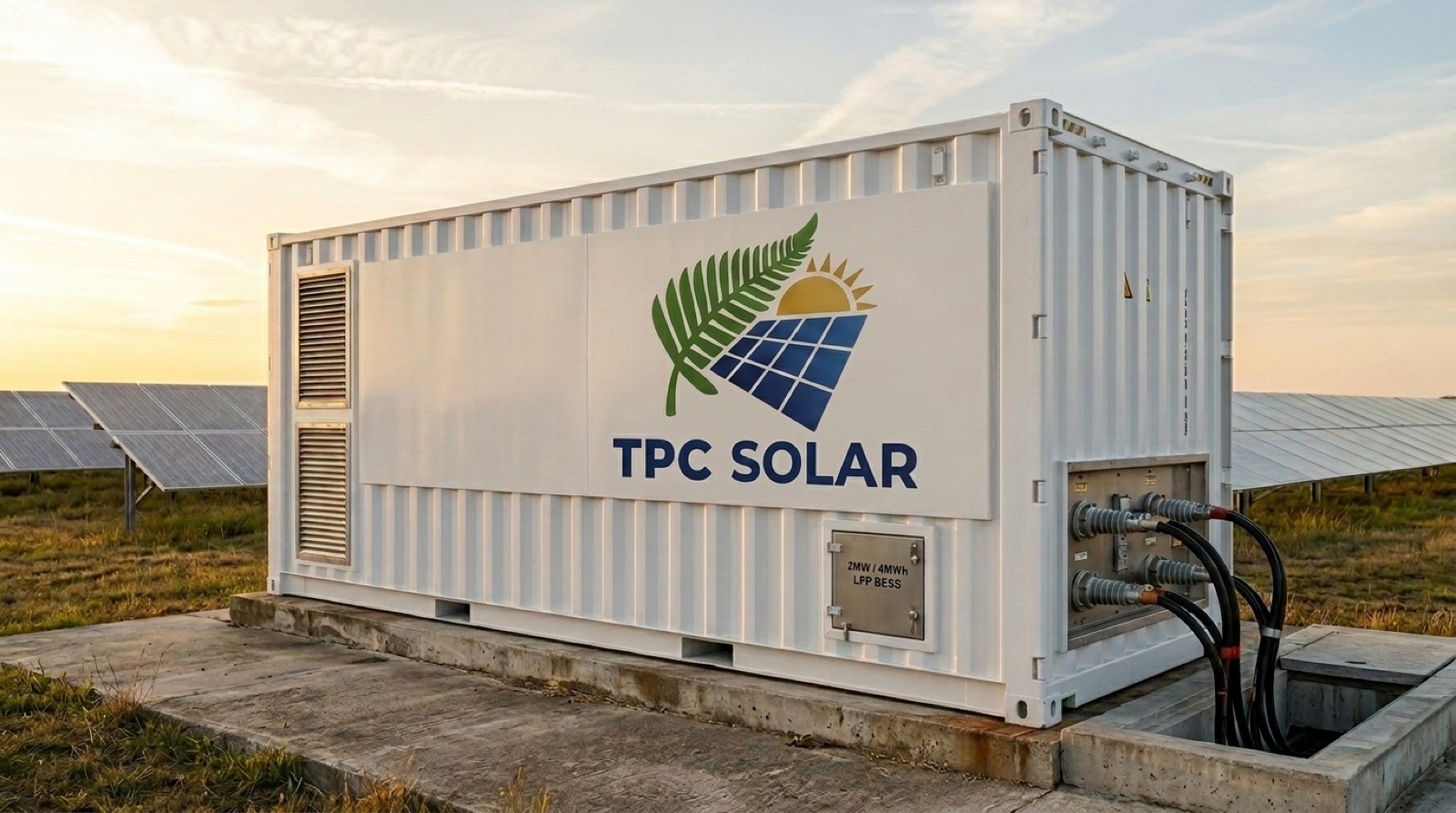

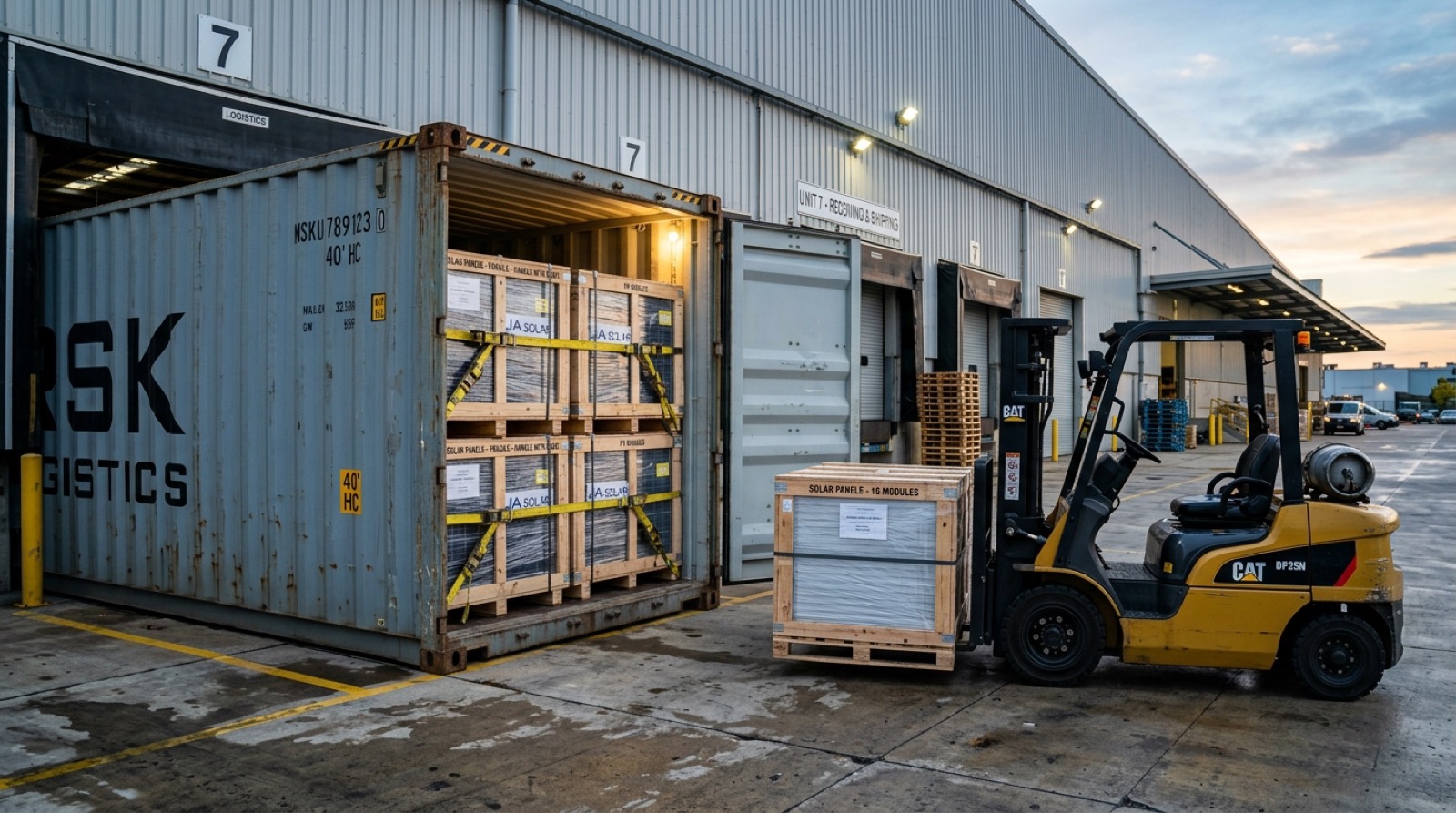
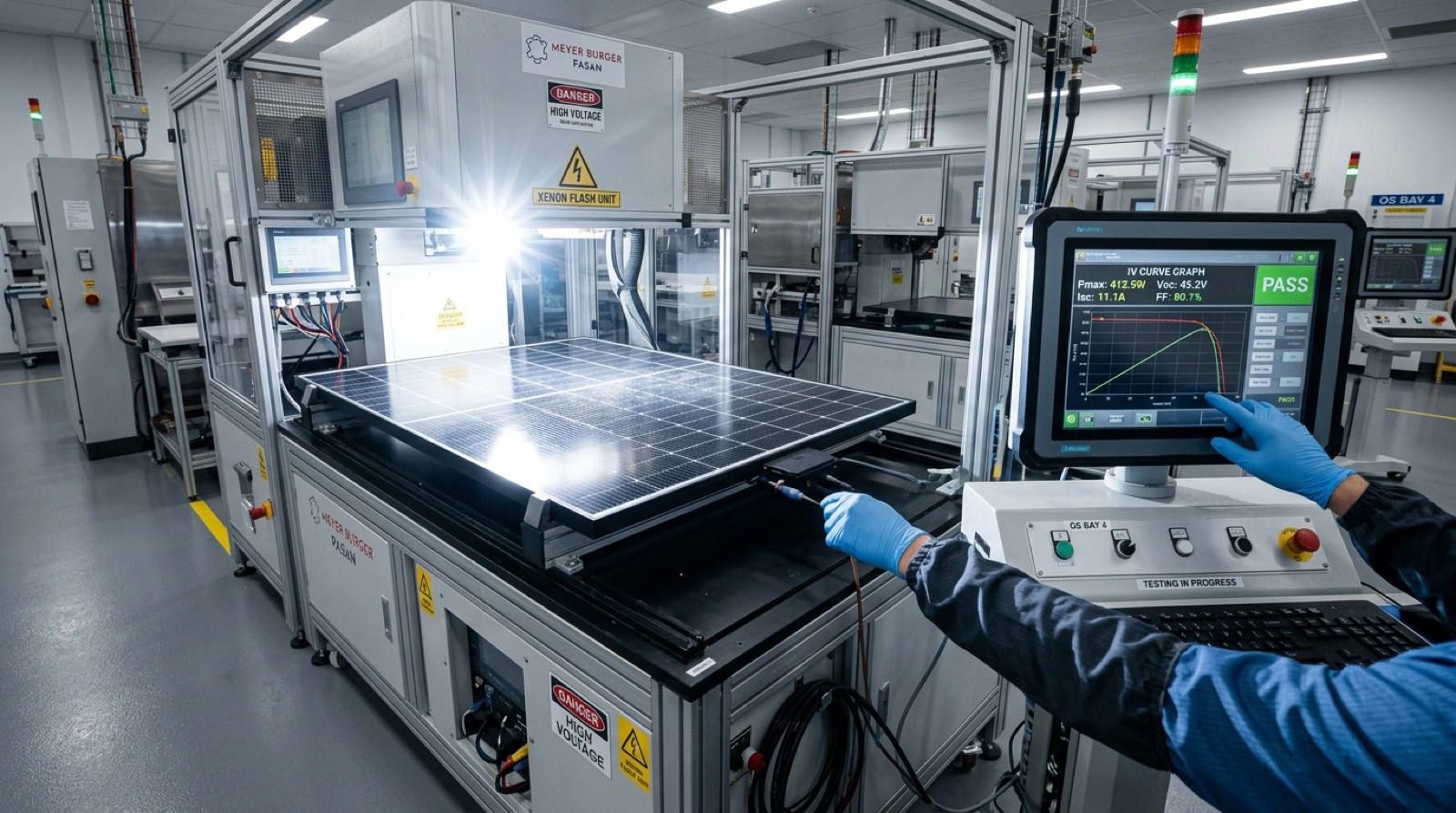
A standardised 10 kWp PV + 50 kWh LFP retrofit kit, pre-assembled in Nanjing and installed in a single day per tower, replaces 24/7 diesel runtime on 120 remote southern-Iraq telecom sites. Aggregate diesel runtime falls by ~92%; aggregate Year-1 yield is ~2.1 GWh.
The operator runs 120 remote telecom towers across the Basra, Dhi Qar, Maysan, Muthanna and Wasit governorates — average load 2.0–2.8 kW continuous, peaking around 4.5 kW during cell-handover traffic spikes. Pre-project, every tower carried a 20 kVA diesel set running 24/7 with battery autonomy of less than 90 minutes for ride-through during refuel and maintenance.
Three problems compounded: fuel logistics (each tower needs a tanker visit every 7–14 days, and convoy costs through rural southern Iraq are a non-trivial OpEx line), theft and pilferage (diesel-cost markets created a recurring fuel-loss problem), and maintenance frequency (a continuously-running 20 kVA set on a remote pad has predictable failure modes — coolant, oil, injector — that drive an unscheduled service truck out every 2–3 weeks).
The brief: roll a single standardised retrofit across the entire fleet, cut diesel runtime by an order of magnitude, standardise the install procedure so any crew of four can complete a tower in one day, and centralise telemetry so 120 sites can be operated by a 3-person NOC team.
A custom-engineered, factory-pre-assembled retrofit kit replaces what would otherwise be 120 separate small EPC engagements. Every tower receives an identical hardware bill of materials; the install crew runs the same sequence at every site; the telemetry stream maps to identical channels on the NOC dashboard. The variability is moved from the field to the factory floor — which is the only place it can be controlled.
Three engineering decisions diverge from a typical telecom-tower solar retrofit:
A single per-tower kit topology — PV array on the tower-base ground-frame, factory-skid containing hybrid inverter and 50 kWh LFP, AC tie to the RF cabinet and to the diesel ATS. Identical at every one of the 120 sites.
Component selection is illustrative — final BoM in any binding TPC delivery is calibrated to the operator's RF cabinet load profile, tower base geometry, regional ambient extremes, and the supplier list current at quote time. Every kit ships factory-direct, FAT-tested as a complete enclosure assembly.
| Component | Specification | Per kit | Source |
|---|---|---|---|
| PV module | N-Type TOPCon mono · 555 W · 144-cell · IEC 61215 / 61730 | 18 | Factory-direct |
| Ground-frame mounting | Hot-dip galvanised steel, 25° fixed tilt, AS/NZS 1170.2 wind region B equivalent | 1 set | Factory-direct |
| Hybrid inverter | Single-phase 230 V · 6 kW continuous / 10 kW surge · 600 V DC MPPT · IP65 | 1 | Factory-direct |
| LFP battery modules | 10 kWh module · LiFePO₄ · IEC 62619 · BMS thermal management · 5 modules per kit | 5 | Factory-direct |
| Pre-fab enclosure | Outdoor steel cabinet · IP55 · active cooling · seismic-rated · pre-wired DC/AC dist + SPDs | 1 | Factory-direct |
| EMS / telemetry modem | 4G/LTE primary, satellite backup, MQTT to NOC, OTA firmware, predictive-maintenance triggers | 1 | Factory-direct |
| DC combiner / SPDs | 600 V Type II surge arresters, fused string combiners | 1 | Factory-direct |
| Cabling pack | Pre-cut, pre-terminated DC + AC + earth bond, labelled by termination point | 1 set | Factory-direct |
| Field install pack | Anchor bolts, torque-tagged fasteners, install manual, FAT report, telemetry commissioning sheet | 1 | Factory-direct |
| Site install & SAT | 4-person crew · 1-day install · SAT report, telemetry validation, NOC dashboard registration | 1 day | TPC engineering |
Generation is computed from public NASA POWER irradiance for ~31°N southern Iraq, applied to the aggregate 1.2 MWp at PR 0.78 — consistent with fixed-tilt ground-frame installs at desert ambient with moderate seasonal soiling. Hover any bar for the underlying figure.
Per-tower yield is ~17.5 MWh/yr, more than double the ~7 MWh/yr the RF cabinet consumes — surplus charges the BESS through the day and reserves capacity for the seasonal sandstorm soiling-loss budget (~4% of annual yield). Diesel runtime drops to ~660 hours/year per tower; almost all of that is concentrated in 3-day low-irradiance windows in December and January.
Identical BoMs across 120 sites aren't the same as identical kits — labelling, cable harness lengths, termination tags and torque marks have to be identical too. The first 12 towers ran 35% slower than the planned schedule until the kit-assembly procedure was rewritten to eliminate every variable a field crew could introduce.
The temptation to remove the diesel asset after retrofit is high. It is also wrong. The 92% runtime reduction is a planned outcome of EMS governance — the diesel still has to be available for an unmodelled 4-day overcast week or an unscheduled maintenance window on the BESS. A standby asset earns its keep at the 99th percentile, not in the median month.
Without a real NOC fed by per-minute telemetry, a 120-tower fleet retrofit is a depreciation problem disguised as a deployment. The NOC was specified, built, and commissioned before the first kit shipped; its dashboard, alerting, and ticket workflow were defined at the kit BoM stage, not as a post-deployment afterthought.
Indicative imagery from the TPC delivery library. Site-specific photography is held under the engagement NDA and shared with qualified counterparties on request.
For the first six months the NOC team kept asking when the diesel runtime would stabilise. It didn't stabilise — it just kept dropping, because the BESS state-of-charge floor we'd set in the EMS was over-conservative against the actual measured load. After we tuned that, runtime fell another 18%. That tuning is impossible without telemetry. The kit is the cost line; the telemetry is the asset.Fleet retrofit programme lead · telecom-tower engagements · TPC engineering
Quote is illustrative of the engineering posture TPC brings to telecom-fleet retrofit engagements. This reference profile is not tied to a named or contracted client; site-specific testimonials are released only with the operator's signed consent under the engagement NDA.
Telecom-tower fleet retrofit, distributed off-grid solar, or standardised pre-fab BESS kits — TPC's engineering team will scope the same equipment envelope for your project under a one-business-day SLA.