Build photography
From factory floor to alpine site.
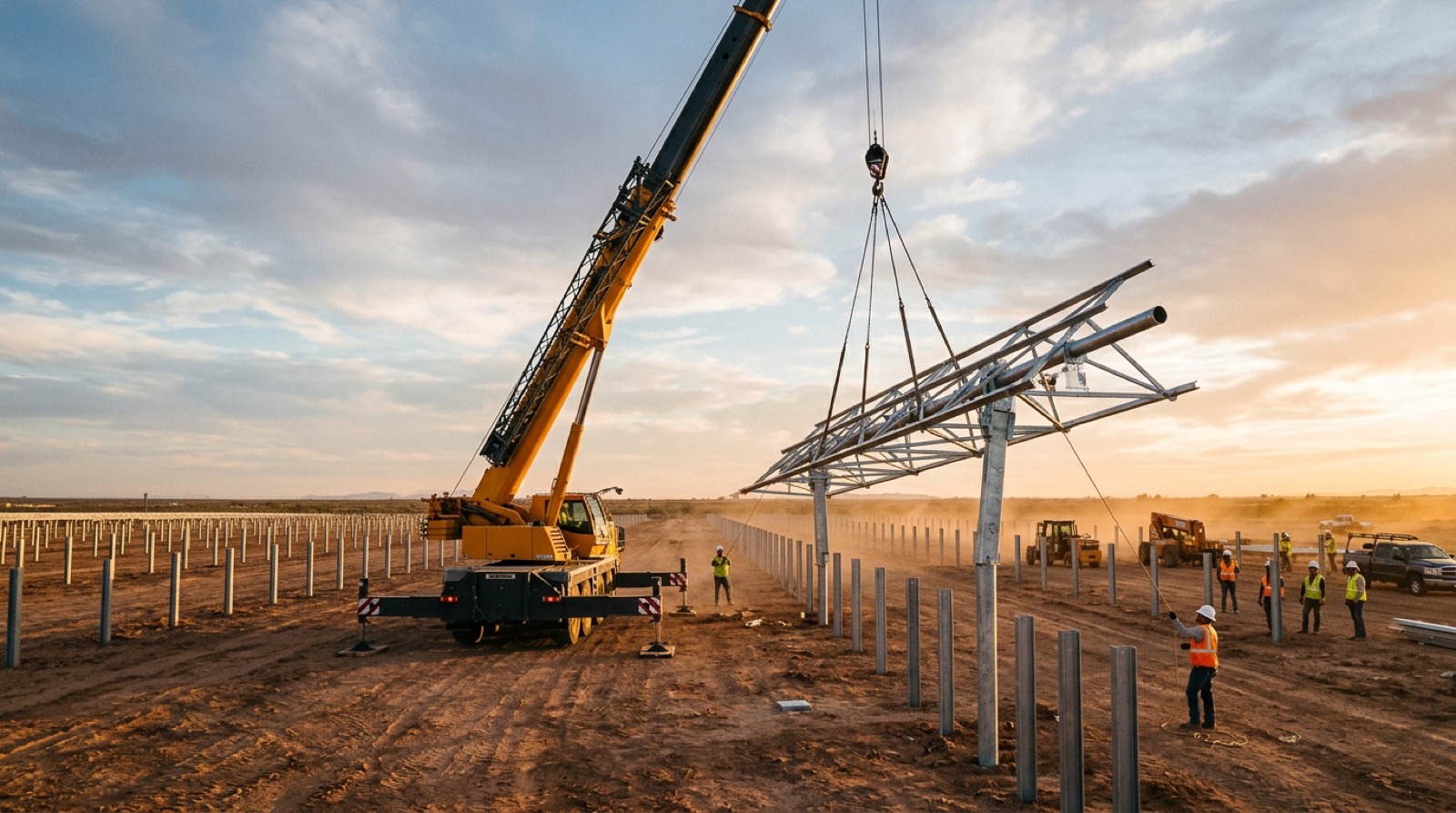
Indicative imagery from the TPC delivery library. Site-specific photography is held under the engagement NDA and shared with qualified counterparties on request.
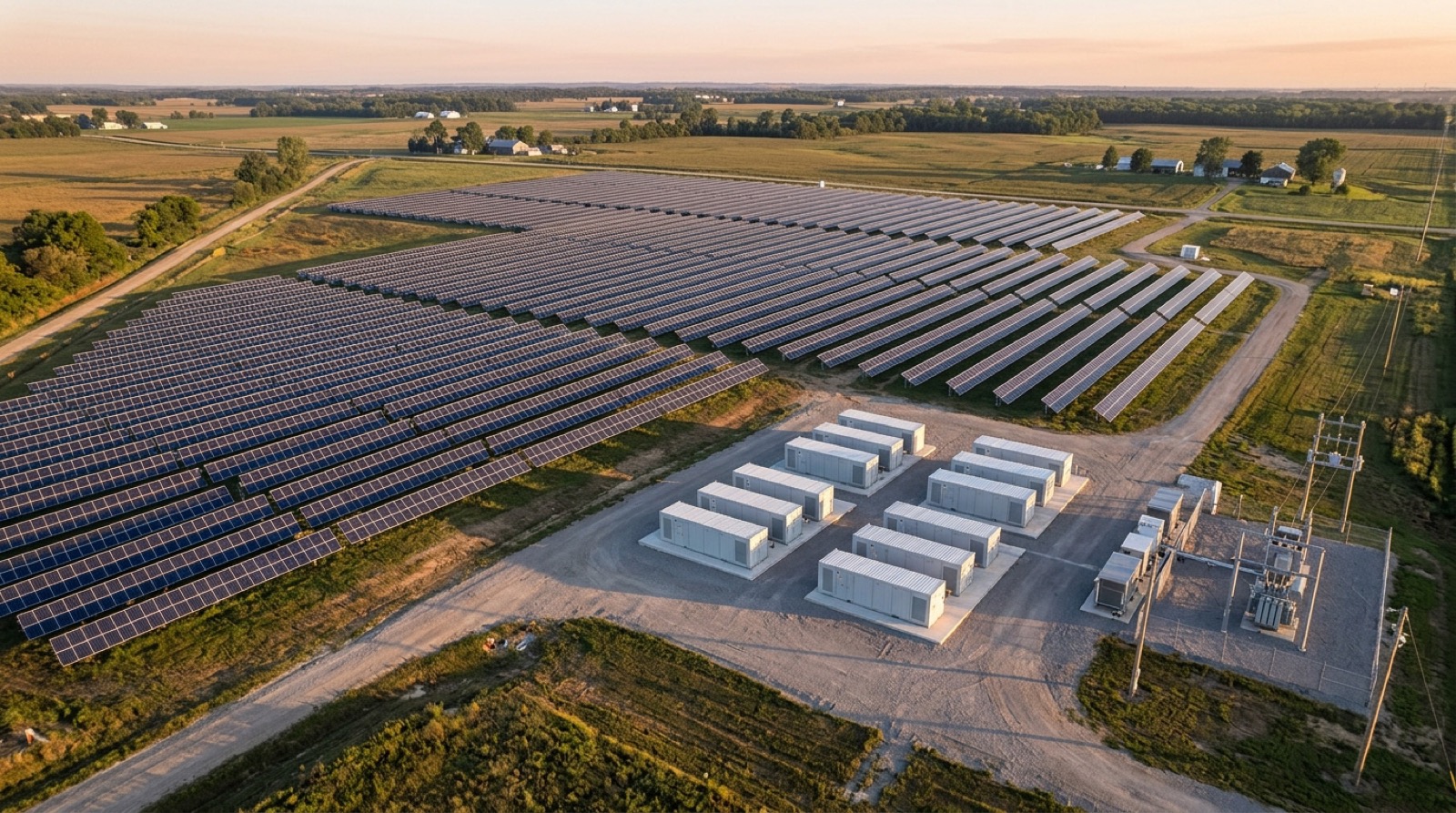
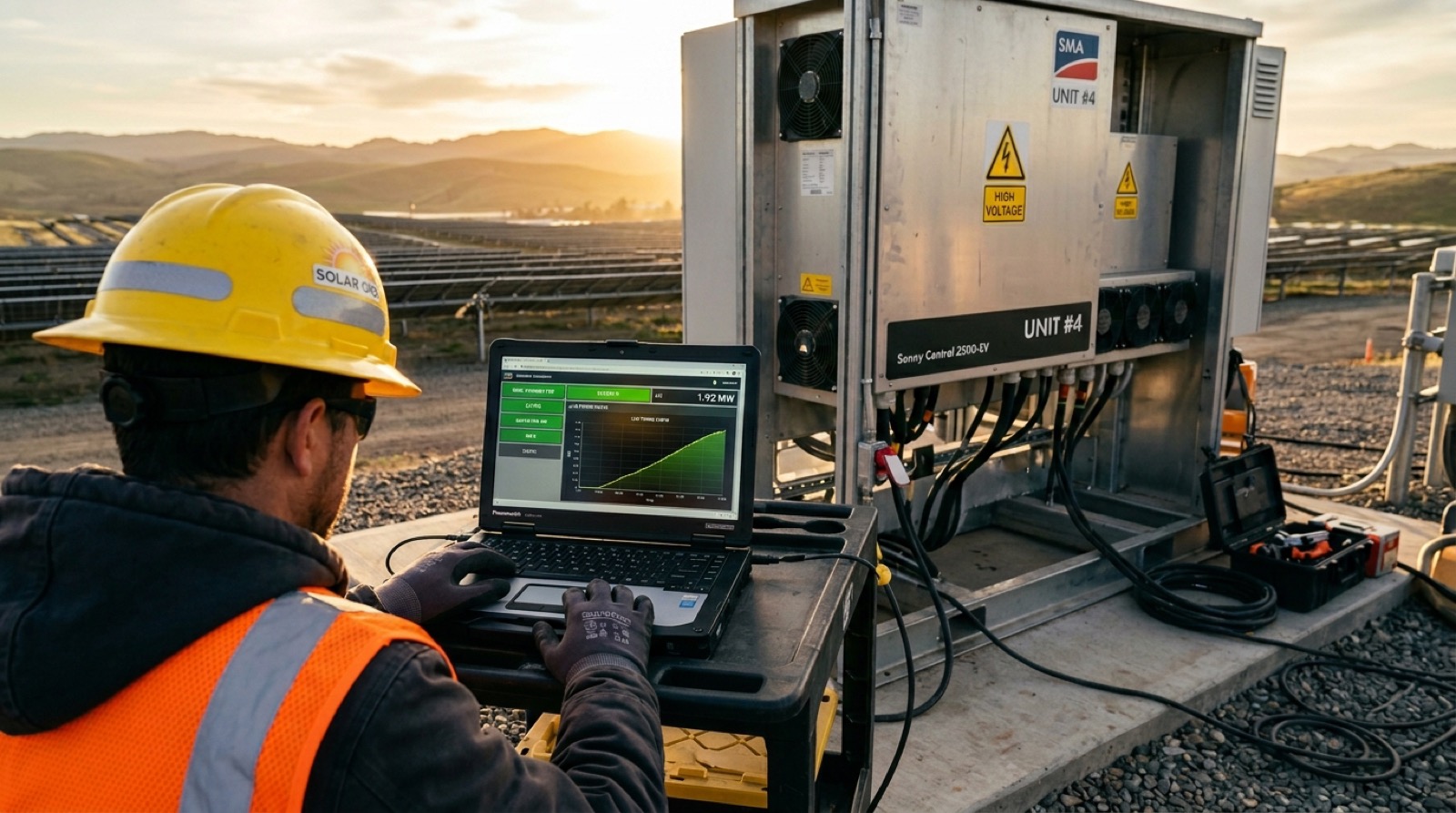
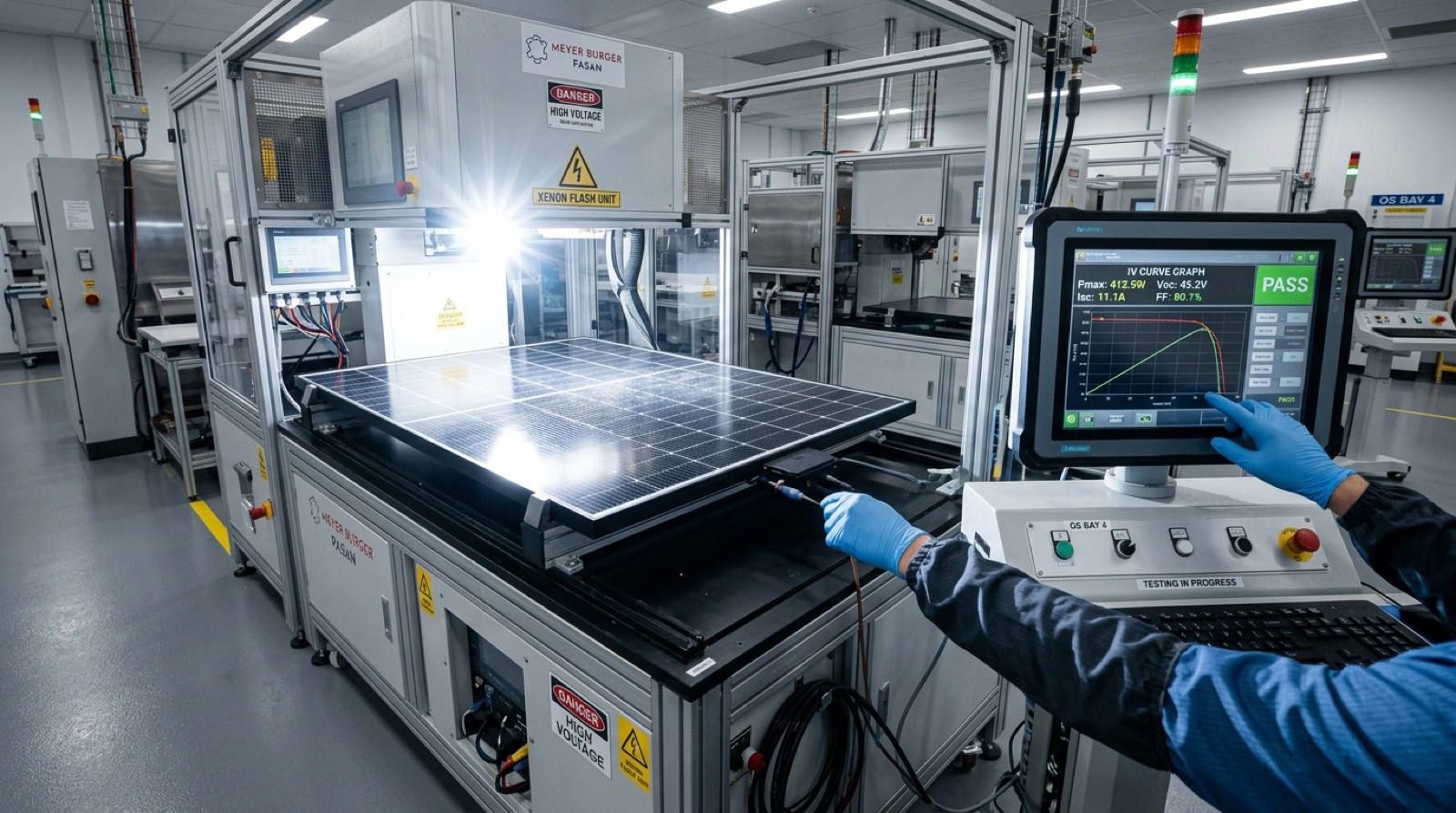
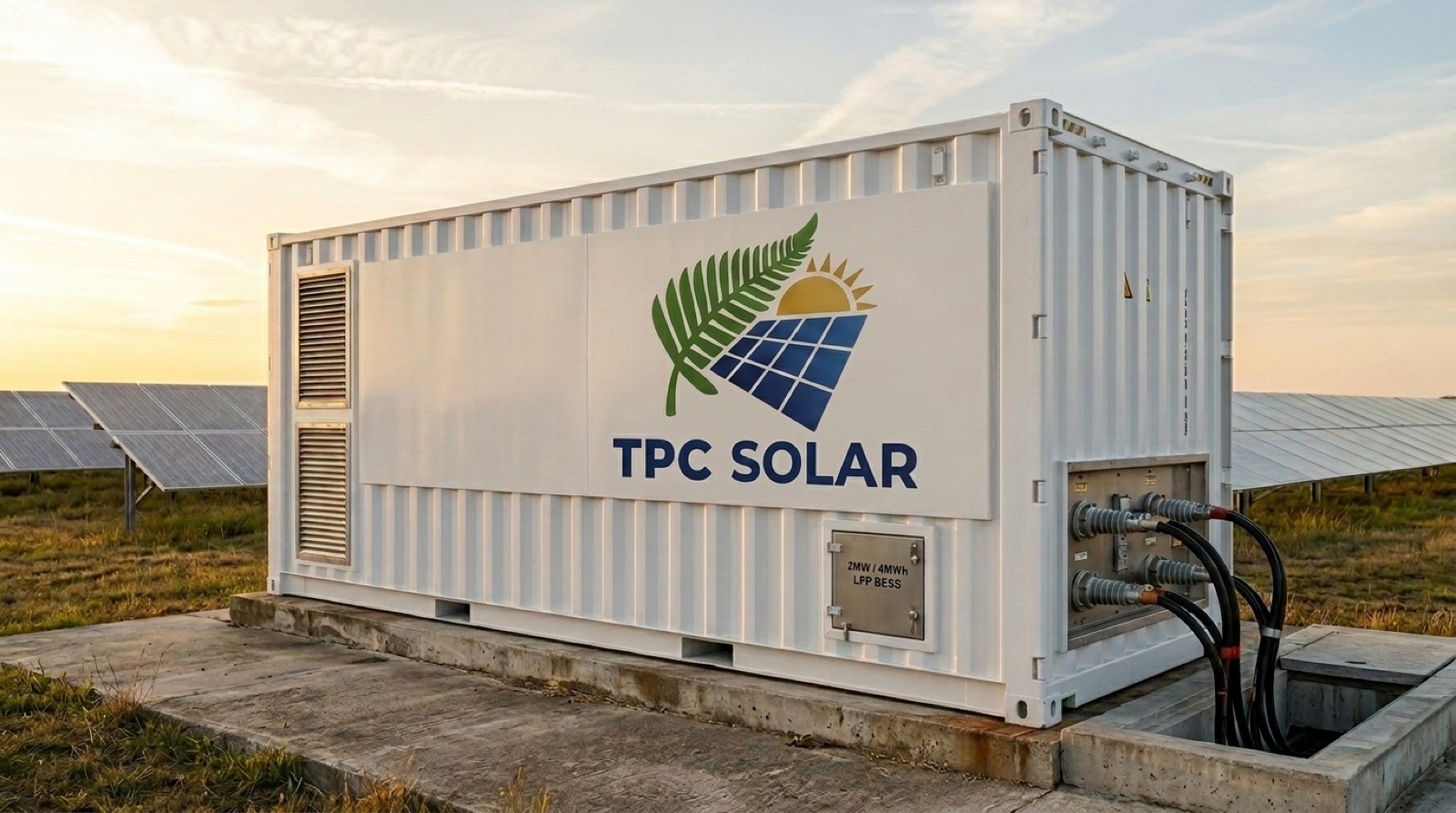
A 480 kWp solar array paired with 1.2 MWh of LFP storage runs three off-grid Central Otago lodges through the full Queenstown winter — without a litre of diesel, AS/NZS 4777.2 compliant, and supported under the EECA programme.
The three lodges share a remote site — no grid, no fibre, no easy road in May through September. Pre-project they each ran 80 kVA diesel gensets averaging ~280 L/day in winter, refuelled by alpine-rated tanker on a 6-week cycle and audibly running 24/7 through guest stays.
Three problems compounded: fuel logistics (one missed delivery = three lodges dark), guest experience (genset noise was the most consistent complaint in post-stay surveys), and EECA programme alignment — the operator had committed to diesel reduction targets tied to a regional tourism decarbonisation grant.
The brief was deliberately constrained: zero diesel during the May–September peak season, full AS/NZS 4777.2 compliance for the inverter stack, and a payback inside the operator's 4-year capex horizon.
Most off-grid solar designs size for annual-average yield and accept a diesel back-up margin. The Queenstown brief inverted that: size the system so the site survives the absolute worst expected week of winter — which in Central Otago is late June with three to four sequential overcast days at 1.4 peak-sun hours, snow shading the lower mounting rows, and combined evening lodge load peaking around 60 kW.
Working back from that constraint produced three design decisions that diverge from a typical NZ rooftop system:
A simplified single-line diagram of the as-built microgrid. AC-coupled topology lets the genset drop offline cleanly once the BESS state-of-charge reaches operational floor.
Component selection is illustrative — final BoM in any binding TPC delivery is calibrated to site survey, lines-company connection, and AS/NZS 4777.2 EESS-approved inverter list at quote time. NZ-side scope is procured locally; primary equipment ships factory-direct to CIF Auckland.
| Component | Specification | Qty | Source |
|---|---|---|---|
| PV module | N-Type TOPCon bifacial double-glass · 560 W · 144-cell | 858 | Factory-direct |
| Mounting rail | Aluminium 6005-T5, 30° fixed, 600 mm clearance, AS/NZS 1170 wind-load certified | 132 sets | NZ-sideNZ |
| Driven pile foundation | W6×9 hot-dip galvanised, 3.0 m, NZGS-tested embedment | 176 | NZ-sideNZ |
| String inverter | Hybrid string · 355 kW total · AS/NZS 4777.2:2020 listed · IP66 · C5 corrosion class | 2 | Factory-direct |
| LFP battery cabinet | LiFePO₄ 314 Ah cells · 1.2 MWh nominal · alpine-rated cabinet · BMS thermal management | 2 | Factory-direct |
| Energy management system | Microgrid controller · 4G + satellite link · O&M telemetry to TPC NZ Office | 1 | Factory-direct |
| DC combiner / SPDs | 1500 V Type II surge arresters, fused string combiners | 12 | Factory-direct |
| LV switchboard | 3-phase 400 V combiner with main ACB, generator changeover, AS/NZS 3000 compliant | 1 | NZ-sideNZ |
| Cabling & earthing | 1500 V DC PV cable, LV armoured to AS/NZS 1429.1, AS/NZS 1768 earthing | ~4.2 km | NZ-sideNZ |
| Civil & access | Bulk earthworks, perimeter fence, gravel access road, EWP launch pad | 1 lot | NZ-sideNZ |
| Commissioning & FAT/SAT | Factory acceptance test (China) + site acceptance test (NZ), commissioning report, AS/NZS handover dossier | 1 package | TPC engineering |
Monthly generation is computed from public NIWA SolarView irradiance data for the Queenstown / Cromwell zone, applied to the as-built array spec at a 0.78 performance ratio (typical for NZ alpine fixed-tilt with snow-shed clearance). Hover any bar for the underlying figure.
June low = 1.4 peak-sun hours/day average — the design constraint week. The 24-hour LFP buffer combined with morning charge cycle covers four sequential overcast days at this irradiance level. Annual yield of ~1,065 kWh/kWp is consistent with EECA reference data for South Island fixed-tilt installs above 600 m elevation.
Sizing alpine off-grid systems on annual-mean irradiance produces a system that fails in late June. Sizing on the modelled worst sequential 4-day low-light period — even at 1.4 peak-sun hours — is the discipline that retires the diesel back-up cleanly.
LFP cells stop accepting charge below 0 °C. For Central Otago the cabinet specification was −15 °C ambient with internal heaters drawing 80 W when off-charge — small parasitic load, large seasonal benefit. Cabinets without active thermal management lost 40 % usable capacity in test winters.
The 600 mm finished-ground clearance adds ~3 % to mounting steel cost. It also eliminates manual snow clearance from the monthly winter visit list — pays back the steel premium in the first season's avoided callout cost.
Indicative imagery from the TPC delivery library. Site-specific photography is held under the engagement NDA and shared with qualified counterparties on request.
The diesel was the easy thing to remove. The hard thing was building a system the operator could trust through three winters without us standing next to it. That meant designing the LFP buffer for the worst week of June, not the average year — and then proving it on a bench, on a snow-load test rig, and on day one of a guest stay.Site engineer · alpine commissioning · TPC NZ delivery team
Quote is illustrative of the engineering posture TPC brings to off-grid alpine engagements. This reference profile is not tied to a named or contracted client; site-specific testimonials are released only with the operator's signed consent under the engagement NDA.
Off-grid microgrid, alpine site, or rural NZ DNO connection — TPC's engineering team will scope the same equipment envelope for your project under a one-business-day SLA.