Build photography
From factory floor to rooftop.
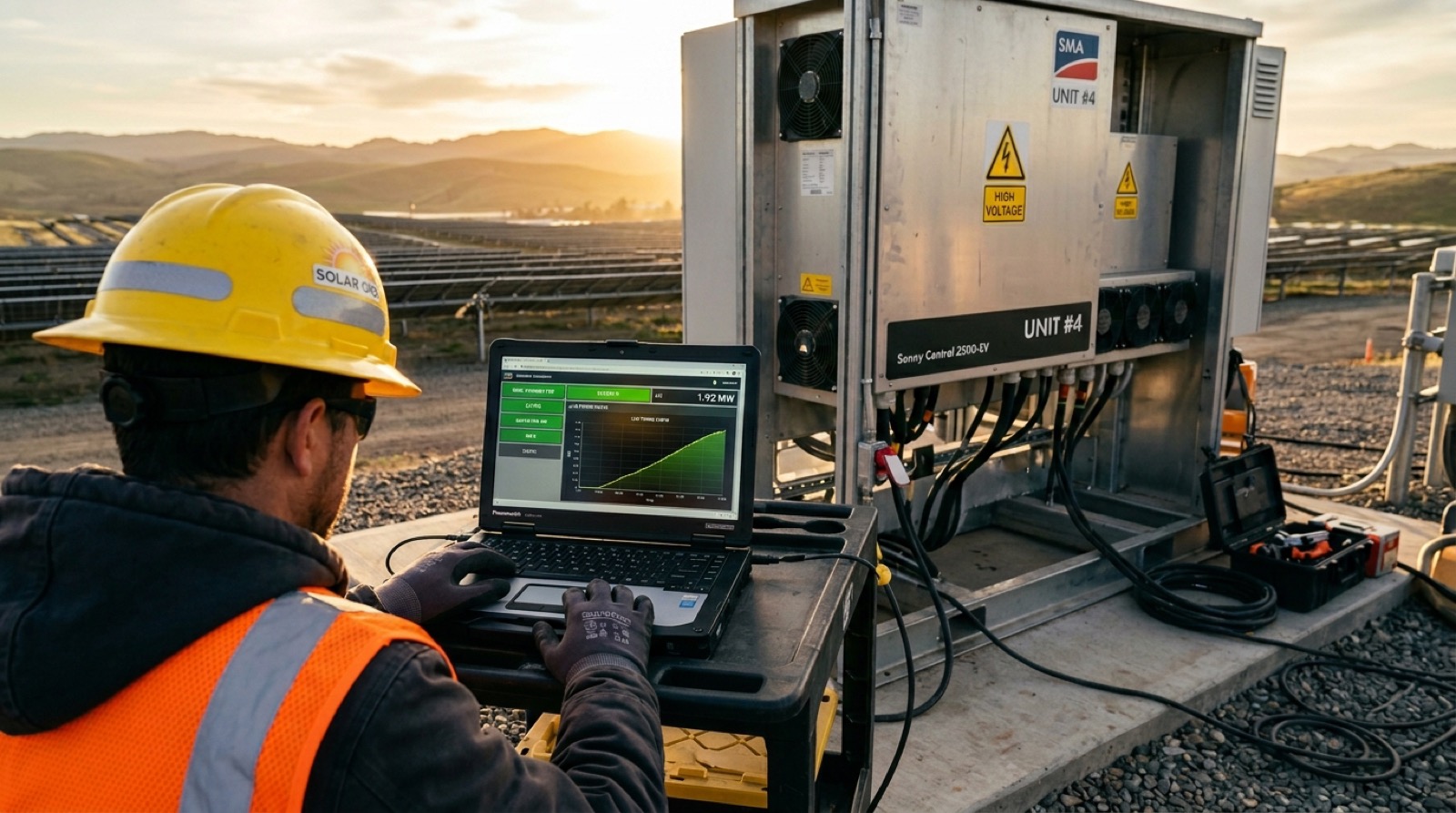
Indicative imagery from the TPC delivery library. Site-specific photography is held under the engagement NDA and shared with qualified counterparties on request.
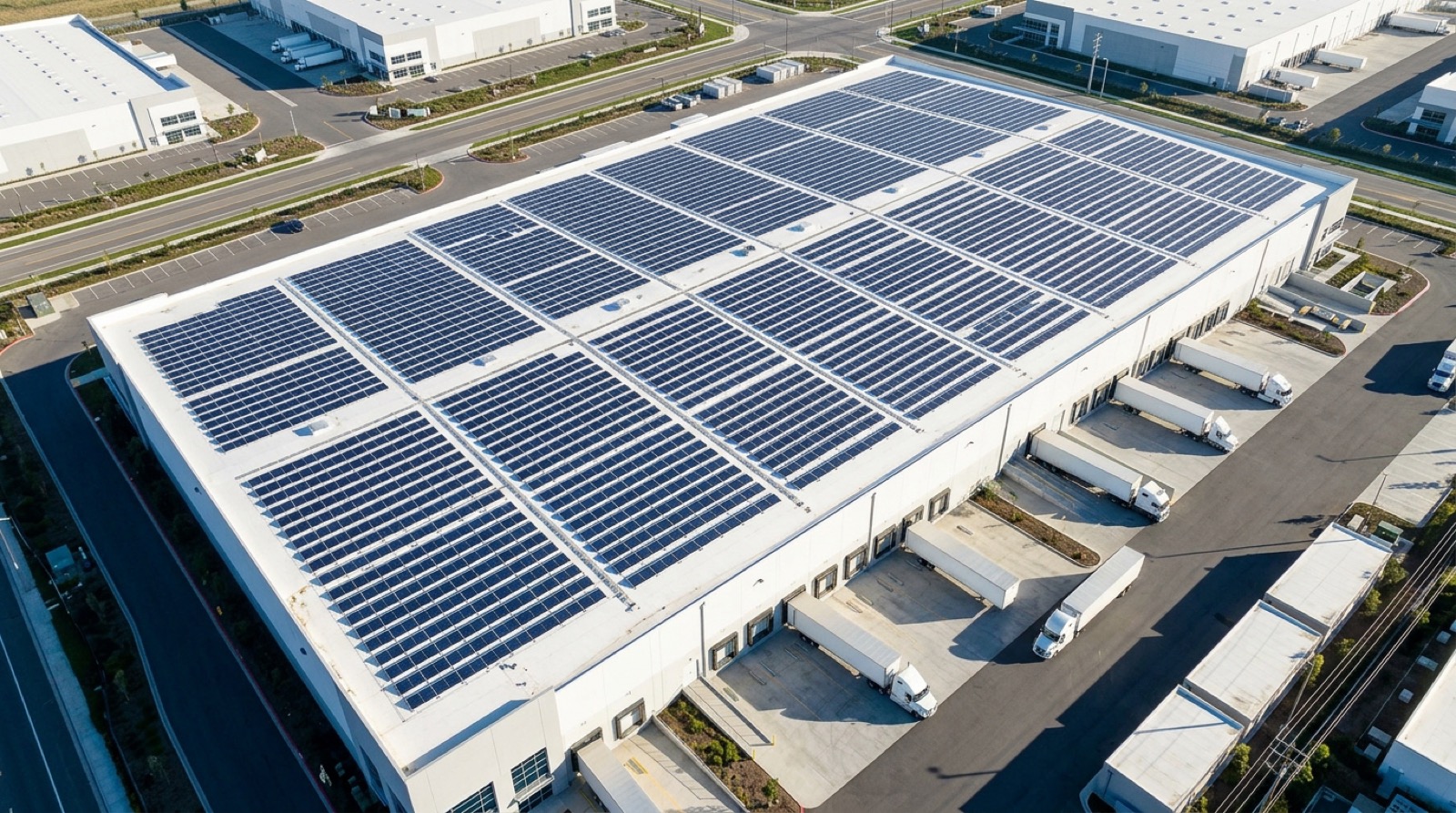
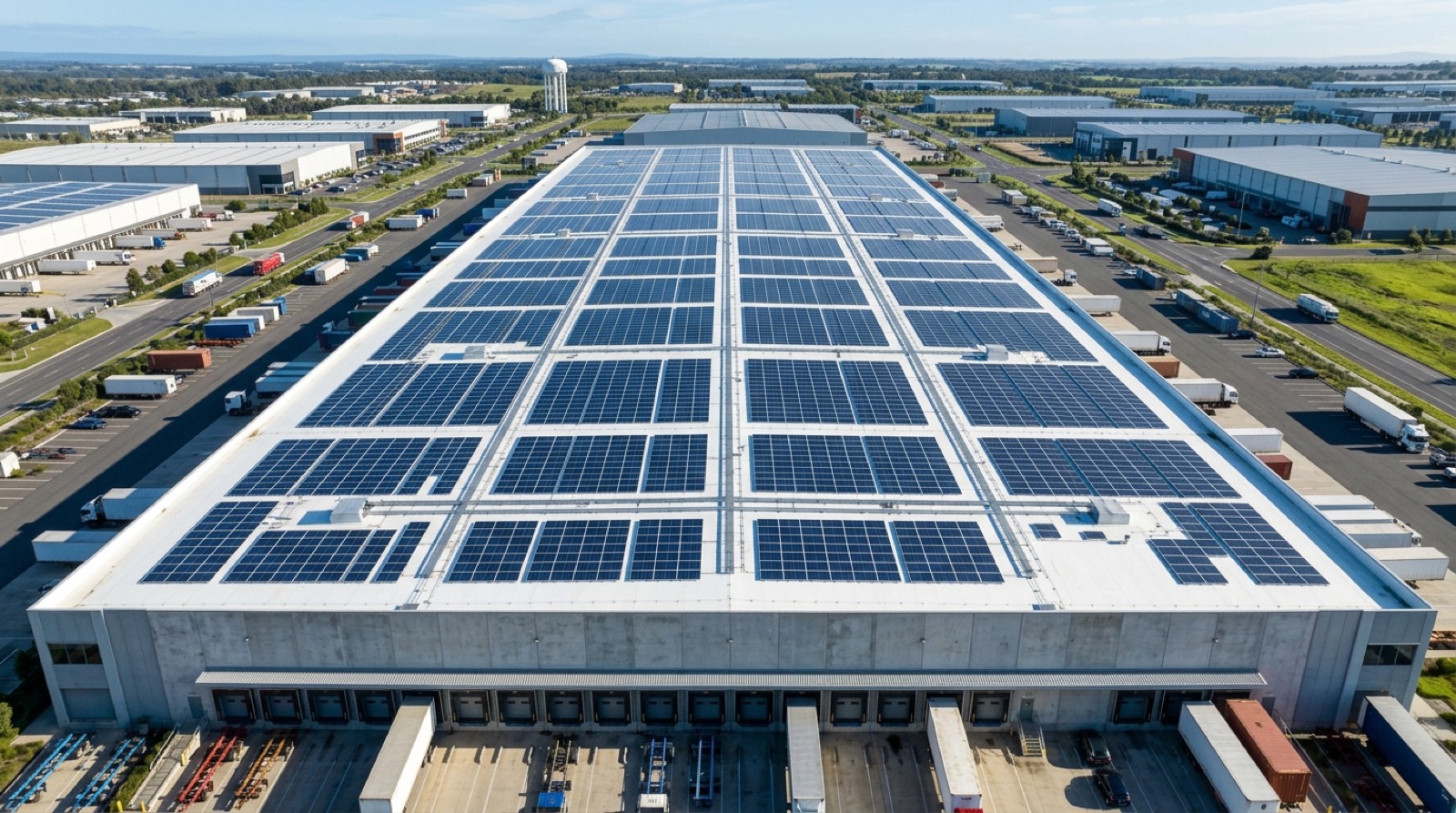
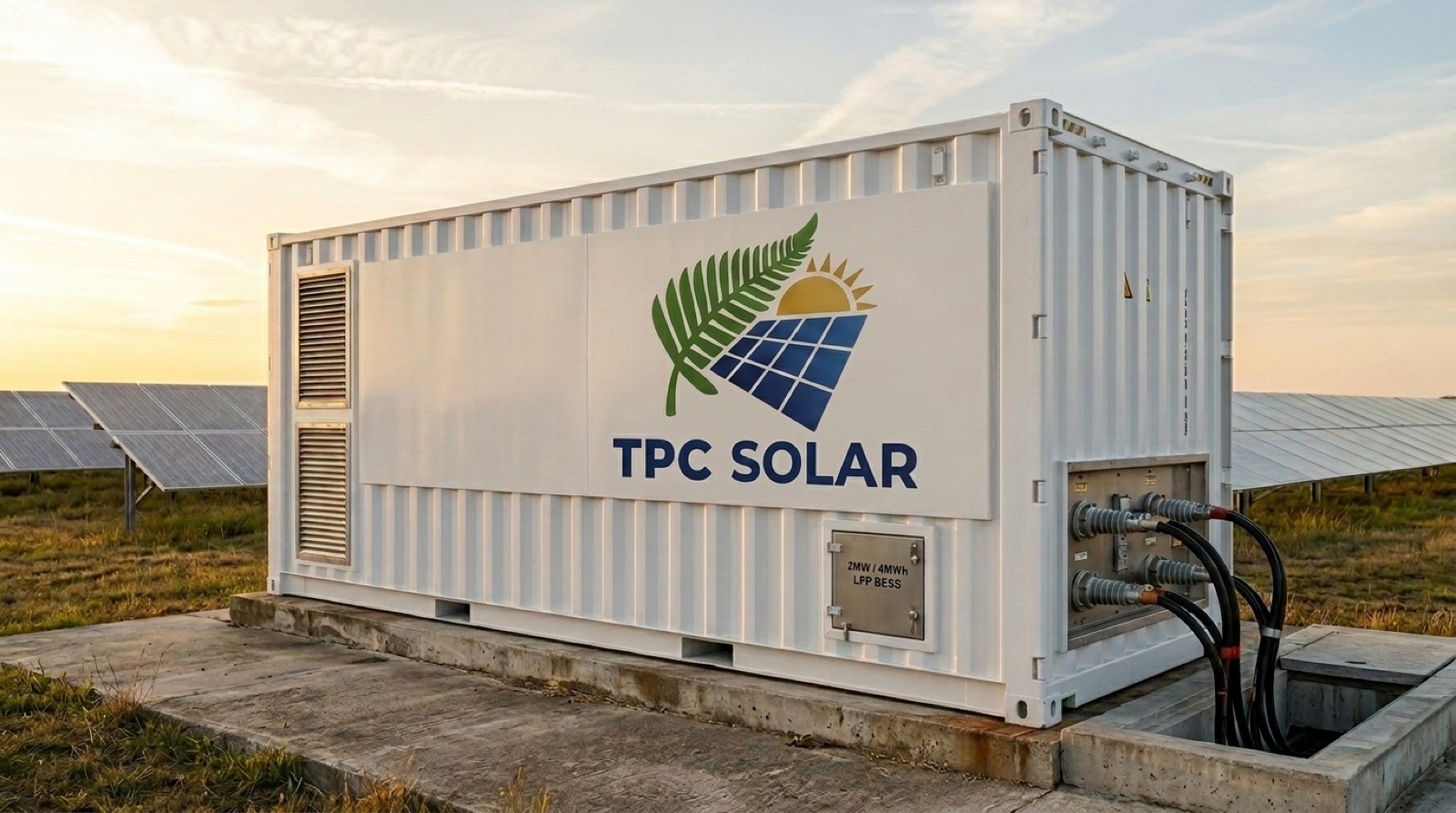
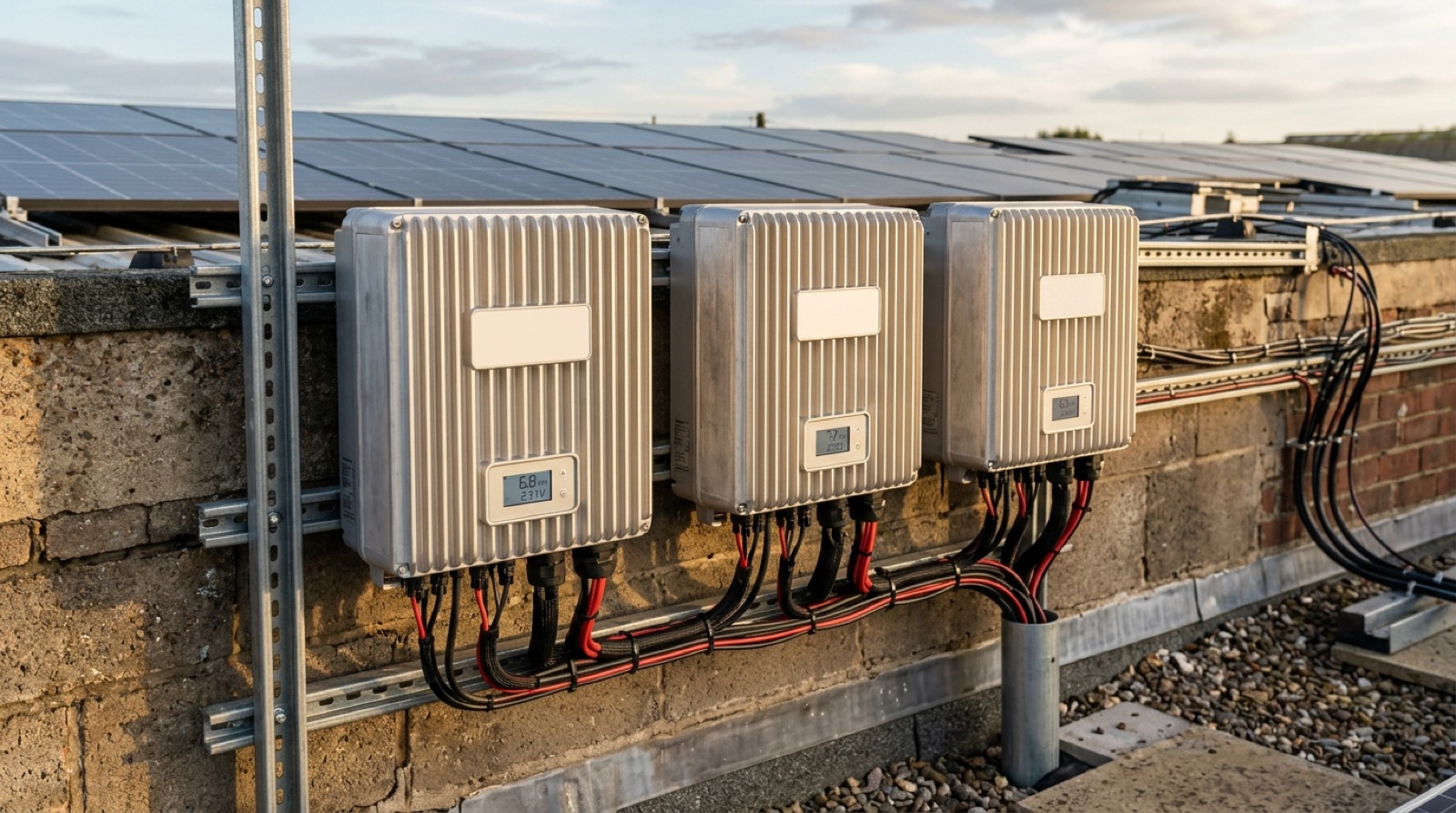
A 2.4 MWp rooftop PV system with 500 kWh of LFP storage carries an Iraqi manufacturing complex through the daytime production shift on solar — and bridges the evening shift across the predictable grid-loss window without firing the on-site diesel set.
The site is a 22,400 m² manufacturing complex with a 1.6 MW continuous daytime load across two production lines, a 900 kW evening shift on a single line, and a permanent 120 kW office and warehouse base. Pre-project, the entire site was carried by the national grid when available and by a 2.0 MVA diesel station during scheduled outages — which in Baghdad's Karkh sector run between 2 and 6 hours of every working day.
The commercial problem isn't the diesel itself — it's diesel runtime as a function of an unpredictable grid. Fuel deliveries are quoted weekly, tariff-loaded, and a single late tanker can stop the line for half a shift. Diesel runtime had grown to ~3,800 hours/year across the two sets, with an avoided fuel-cost line item that was the second-largest controllable OpEx after raw materials.
The brief: shave PV against the daytime load with as close to 100% self-consumption as possible, cover the evening-shift load through the typical 2–3 hour evening outage window with LFP, and only run the diesel when both PV and BESS are unavailable — turning the diesel from a primary fuel source into a true backup-of-last-resort.
The 22,400 m² roof would hold ~4.0 MWp at typical commercial spacing — but at that size, midday solar would routinely exceed daytime load, exporting kWh into a grid that doesn't currently buy them back at a meaningful tariff. The system is sized at 2.4 MWp specifically against the 1.6 MW daytime load curve plus the BESS charge window, holding self-consumption above 92% across the year and leaving roof area in reserve for a later 1.6 MWp expansion if and when net-export tariffs improve.
Three engineering decisions diverge from a typical 2.4 MWp C&I rooftop:
A simple four-source architecture coupled at the building's main 11 kV switchboard, with the hybrid inverter family providing both PV conversion and BESS PCS function. The diesel set is electrically isolated from the BESS and re-enters the bus only on a full grid-loss event with BESS energy below threshold.
Component selection is illustrative — final BoM in any binding TPC delivery is calibrated to roof structural survey, available utility tariff structure, and the supplier list current at quote time. Primary equipment ships factory-direct to a CIF Baghdad incoterm; structural reinforcement and HV scope are procured locally under TPC engineering supervision.
| Component | Specification | Qty | Source |
|---|---|---|---|
| PV module | N-Type TOPCon mono · 575 W · 144-cell · IEC 61215 / 61730 | 4,175 | Factory-direct |
| Ballasted mounting | Aluminium 6005-T5, 10° tilt, structural-survey engineered ballast | ~2.4 MWp | Factory-direct |
| Roof reinforcement | Steel C-section secondary, 8 reinforced bays per structural pass | 1 lot | Site-procured |
| Hybrid string inverter | 1500 V DC · 200 kW · integrated PV MPPT + BESS PCS · IP66 | 12 | Factory-direct |
| LFP battery cabinet | Indoor 500 kWh · liquid-cooled · UL 9540A · IEC 62619 | 1 | Factory-direct |
| Energy management system | EMS · PV-first / BESS / grid-last dispatch · production line interlock · web dashboard | 1 | Factory-direct |
| 11 kV switchboard | Existing main switchboard retrofit · PV+BESS feeder · ATS coordination with diesel | 1 retrofit | Site-procured |
| DC combiner / SPDs | 1500 V Type II surge arresters, fused string combiners | 36 | Factory-direct |
| Cabling & earthing | 1500 V DC PV cable, LV armoured, IEC 60502 | ~3.6 km | Site-procured |
| Fire detection | Aspirating smoke detection in BESS room · NFPA 855 setback compliance | 1 lot | Site-procured |
| Commissioning & tariff modelling | FAT + SAT + 30-day load profile validation + self-consumption optimisation report | 1 package | TPC engineering |
Monthly generation is computed from public NASA POWER irradiance for 33°N Baghdad applied to the as-designed 2.4 MWp rooftop at PR 0.78 — typical for low-tilt ballasted rooftop installations with moderate dust loading. Hover any bar for the underlying figure.
The annual profile is dominated by the May–August plateau (~400–440 MWh/month) where PV alone covers the full daytime production-line load. Self-consumption tops 95% in those months and the BESS reaches full charge by 14:00 ready for the evening outage window. Winter months see self-consumption above 88% even at the production-line draw-down — the system was sized for that case, not for the summer peak.
Filling every available square metre of roof produces a system that exports kWh into a grid that doesn't pay for them, while leaving the BESS occasionally undercharged at evening peak. The 2.4 MWp size was reached after running 12 months of half-hour interval load data through the dispatch model — every 200 kWp added beyond that point pushed self-consumption down by 3–4 percentage points with no commercial offset.
The 4-week structural pass that excluded one bay and reinforced two more cost a single-digit percentage of the project but prevented a real failure mode: ballast load + summer thermal expansion + a single sand-storm wind event in an under-rated bay. The same pass also identified two roof penetrations that would have been hit by the original cable routing.
The 92% self-consumption figure is an EMS outcome, not a hardware outcome — it is the dispatch logic deciding, every 5 seconds, whether the next PV kWh charges the BESS, displaces grid, or services a load directly. Specifying the EMS first and the inverter family second produced a better commercial result than the reverse pathway any contractor would default to.
Indicative imagery from the TPC delivery library. Site-specific photography is held under the engagement NDA and shared with qualified counterparties on request.
The factory measures success in pieces shipped per shift, not kilowatt-hours generated. After the system went in, the evening shift stopped lining up at the diesel set's start-up time waiting for the bus to come back. That was the operational change worth more than the fuel saving on the spreadsheet.C&I delivery lead · MENA rooftop engagements · TPC engineering
Quote is illustrative of the engineering posture TPC brings to C&I rooftop engagements in intermittent-grid markets. This reference profile is not tied to a named or contracted client; site-specific testimonials are released only with the operator's signed consent under the engagement NDA.
C&I rooftop in an intermittent-grid market, evening-shift bridging, or self-consumption optimisation under emerging-tariff structures — TPC's engineering team will scope the same equipment envelope for your project under a one-business-day SLA.