Build photography
From factory floor to hospital rooftop.
Indicative imagery from the TPC delivery library. Site-specific photography is held under the engagement NDA and shared with qualified counterparties on request.

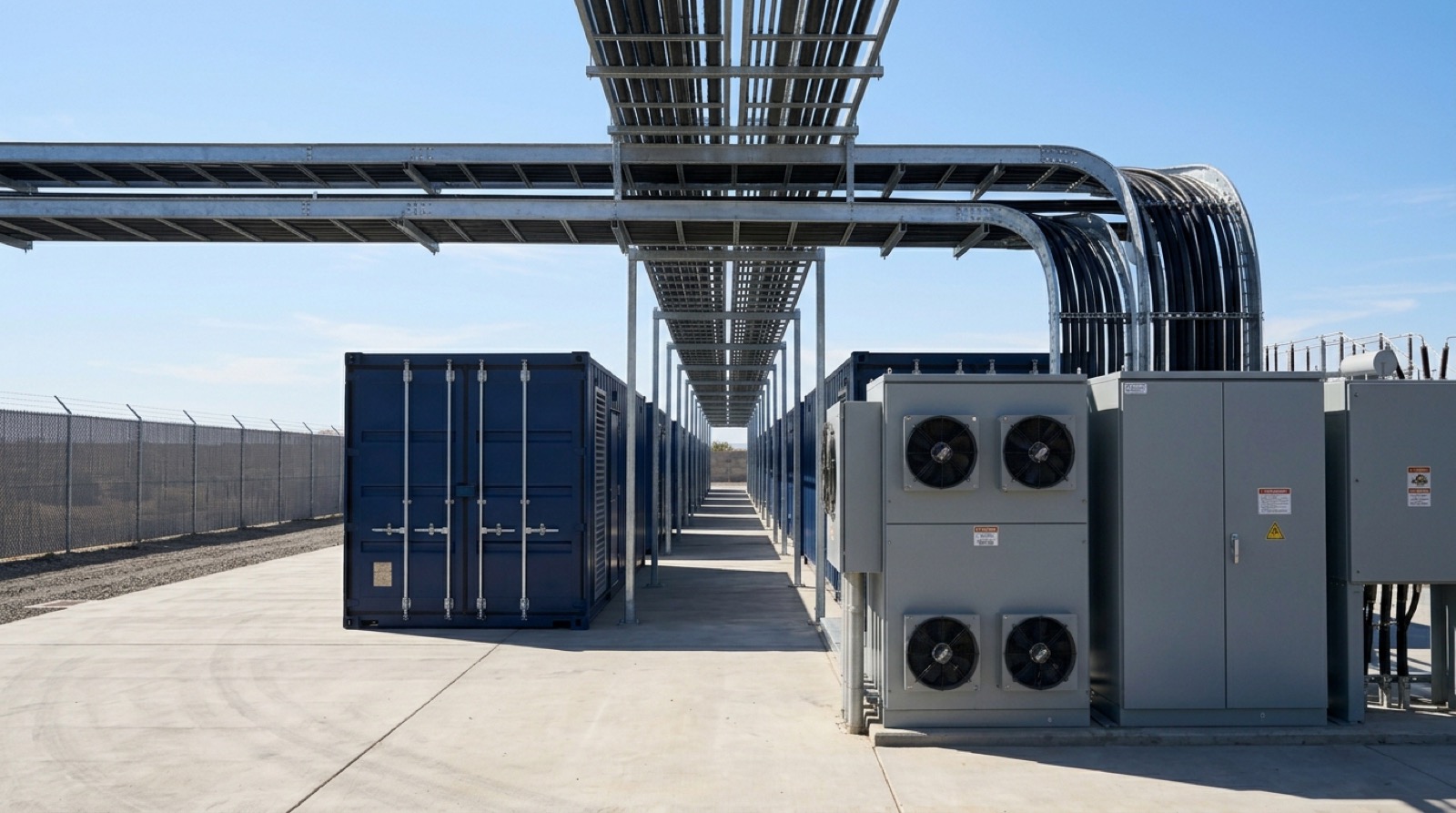
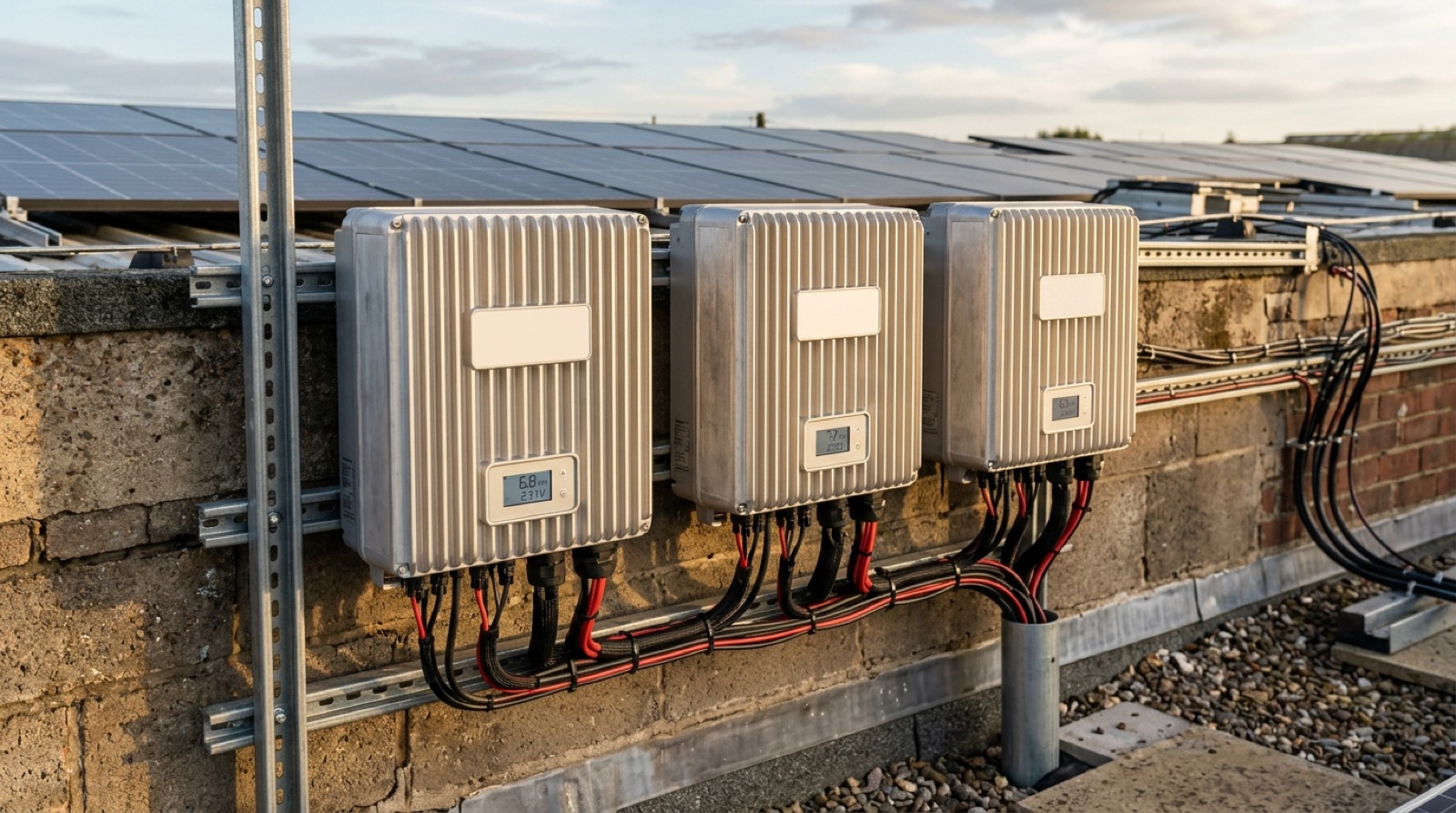
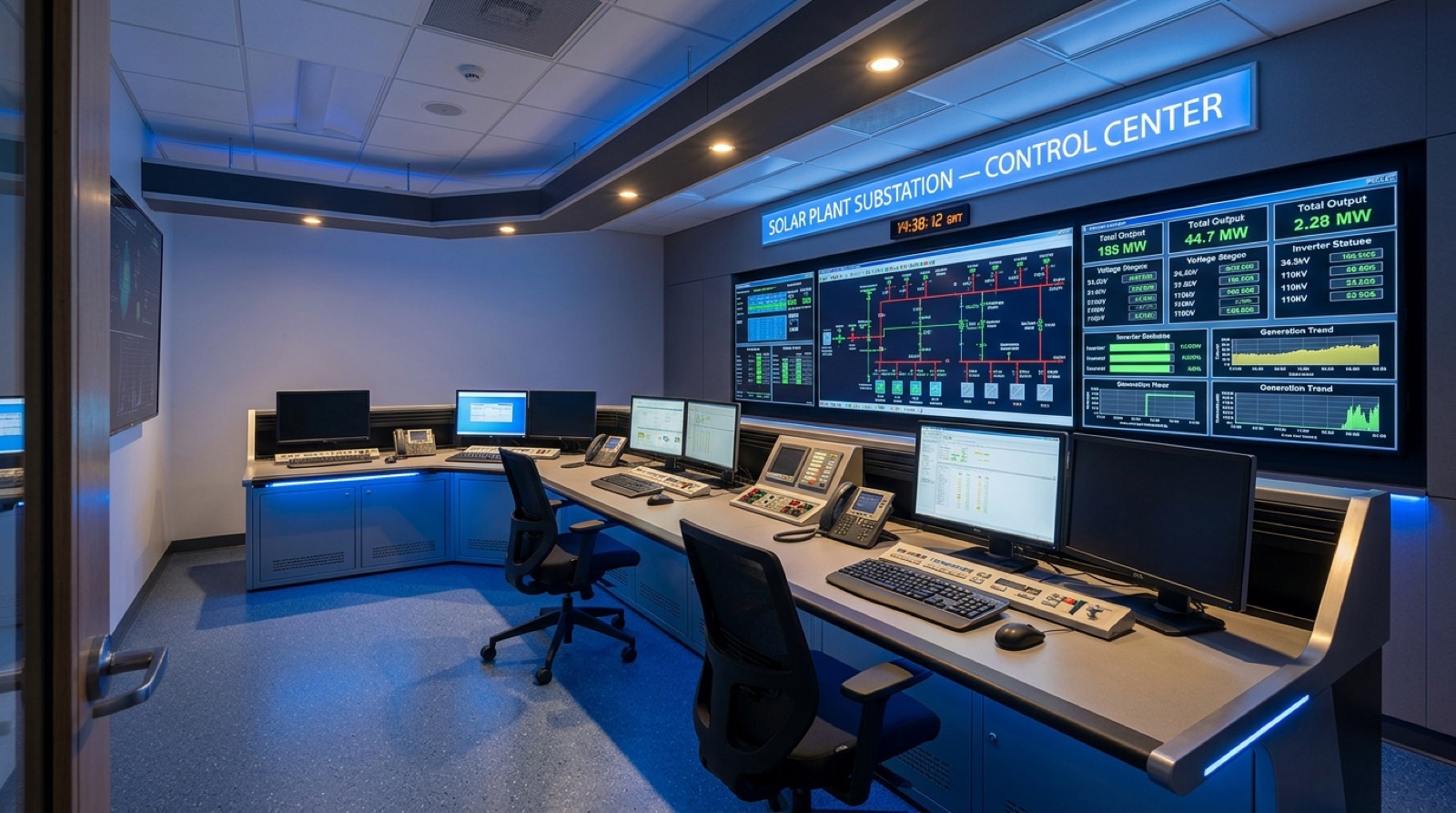

A 1.5 MWp rooftop PV + 4 MWh LFP system carries the 800 kW critical load of a 350-bed Lagos hospital — surgery theatres, ICU, imaging, vaccine cold-chain — across the daily PHCN grid windows, with diesel reserved for the worst week of the dry season.
The site is a 350-bed tertiary hospital in Lagos — surgery theatres, an 18-bed ICU, MRI and CT imaging suites, a maternity wing, a vaccine cold-chain, and the supporting administration, kitchen, laundry and water-treatment plant. Total instantaneous load runs between 820 kW (night) and 1,400 kW (peak daytime); the critical fraction that absolutely cannot lose power — surgery, ICU, imaging mid-scan, cold-chain — is ~800 kW continuous.
The PHCN grid delivers ~14 hours/day on average in this Lagos sector, with the rest carried historically by a pair of 1,250 kVA diesel sets running for ~10 hours/day each in alternation. Diesel fuel consumption ran at ~2.2 million litres/year. The hospital's clinical engineering team flagged three operational risks that fuel cost alone didn't capture: fuel logistics (a delayed Lagos tanker is a non-negotiable scheduling problem), genset transient response (existing sets take ~12 seconds to start-and-sync — long enough to drop the MRI mid-scan), and fire/EHS (the 25,000 L fuel tank sits 12 m from a paediatric ward).
The brief: carry the 800 kW critical load through any PHCN outage with sub-100 ms transfer, reduce diesel runtime by >65% over the year, preserve full backup capability for an unmodelled multi-day grid outage, and commission staged so no single area of the hospital loses power for more than 30 seconds at a time.
A typical hospital solar retrofit adds PV as a fuel-displacing auxiliary to an existing diesel-and-grid topology, leaving the diesel ATS in command. The Lagos brief required something stricter: the BESS PCS must be the master frequency reference through every PHCN-loss event, with the diesel station relegated to standby and the BESS holding the critical-load bus through any PHCN-to-island transition inside 100 ms — fast enough that the MRI doesn't notice and the ventilators don't blink.
Three engineering decisions diverge from a typical 1.5 MWp hospital retrofit:
A 4-source architecture: PHCN grid, PV array, LFP BESS, and the existing diesel station — coupled at the hospital LV switchboard, split into a critical and a non-critical bus, with the BESS PCS as master frequency reference through any PHCN-loss event.
Component selection is illustrative — final BoM in any binding TPC delivery is calibrated to NERC grid-code, hospital clinical-engineering requirements, structural survey, and the supplier list current at quote time.
| Component | Specification | Qty | Source |
|---|---|---|---|
| PV module | N-Type TOPCon · 575 W · 144-cell · IEC 61215 / 61730 · humidity-rated junction box | 2,610 | Factory-direct |
| Rooftop mounting | Aluminium 6005-T5, 12° tilt, ballast + mechanical fix, tropical wind region | ~1.5 MWp | Factory-direct |
| String inverter | 1500 V DC · 200 kW · IEC 62109 · IP66 · 50 °C rated · humidity-controlled enclosure | 8 | Factory-direct |
| LFP battery containers | 20-ft outdoor · 2 MWh per container · liquid-cooled · UL 9540A · IEC 62619 · NFPA 855 setback | 2 | Factory-direct |
| Grid-forming PCS | 1 MW · IEEE 1547-2018 · IEEE 2800 · <100 ms PHCN-loss transfer · island-capable | 1 | Factory-direct |
| Critical / non-critical bus tie | 11 kV / 415 V dual-bus switchboard · SOC-aware non-critical drop logic · clinical-engineering interlocks | 1 lineup | Site-procured |
| Hospital plant controller | IEC 61850 · PHCN-loss auto-sequence · medical-grade dashboard · alarm escalation to clinical engineering | 1 | Factory-direct |
| Existing diesel re-coordination | ATS retune, governor compatibility test with grid-forming PCS, electrical isolation from critical bus | 1 lot | Site-procured |
| DC combiner / SPDs | 1500 V Type II surge arresters, fused string combiners, tropical-zone arc-fault detection | 36 | Factory-direct |
| Cabling & earthing | 1500 V DC PV cable, LV armoured, IEC 62305 lightning protection (tropical thunderstorm regime) | ~4.4 km | Site-procured |
| Fire / EHS overlay | BESS-room aspirating smoke detection, NFPA 855 setback verification, clinical-eng emergency procedures | 1 package | Site-procured |
| Staged commissioning | Per-area cutover plan · max 30-second any-area drop · witness from hospital clinical engineering and biomedical | 1 package | TPC engineering |
| Commissioning & performance test | FAT + SAT + PHCN-loss witness test + 12-month resilience monitoring + lender-grade reporting | 1 package | TPC engineering |
Monthly generation is computed from public NASA POWER irradiance for 6.5°N Lagos, applied to the as-designed 1.5 MWp array at PR 0.78 — note the cloudy, humid tropical profile with a clear June–August rainy-season trough. Hover any bar for the underlying figure.
Equatorial latitude flattens the seasonal profile, but the Jul–Aug rainy-season trough still cuts production ~35% versus the December/January dry-season peak. The financial model treats those two months as the binding diesel-runtime case — if the BESS can recharge to ≥60% SOC by midday on a typical wet-season day, the diesel station does not enter the critical bus that night. Annual yield of ~1,320 kWh/kWp is consistent with humid-tropical equatorial reference data.
Without an explicit critical / non-critical separation, every resilience decision becomes a compromise against the lowest tolerance. Splitting the bus on day one — surgery, ICU, imaging, cold-chain on the critical side; admin, laundry, comfort HVAC on the non-critical — let the BESS sizing exercise solve a real problem (5 hours of 800 kW) instead of an impossible one (5 hours of 1.4 MW).
The 1.5 MWp PV array recharges the 4 MWh BESS by 14:00 on a typical solar day, with surplus for daytime hospital load. Sizing for direct diesel displacement would have demanded 2.6 MWp and produced rainy-season under-performance against the model. The realised 71% diesel runtime cut is a function of the BESS-recharge cadence, not an oversized PV array.
Every staged cutover was witnessed by clinical engineering and biomedical staff before any breaker moved. Surgery scheduling drove the cutover calendar, not the EPC schedule; ICU and ICU-overflow handover periods set the change windows. The single hardest scheduling constraint of the entire project was the maternity wing's neonatal incubator load — a 30-second drop was not acceptable, so the maternity feeder cutover was scheduled inside a planned-empty-ward window agreed three weeks ahead.
Indicative imagery from the TPC delivery library. Site-specific photography is held under the engagement NDA and shared with qualified counterparties on request.
We could measure the success of every other engagement we ever did in kilowatt-hours saved or dollars per watt. For this one the only acceptable measure was that the ICU monitors never blinked, the MRI never aborted a scan, and the cold-chain never logged an excursion. By that measure, the asset is doing its job — and the fuel saved on the spreadsheet is a side effect.Healthcare resilience lead · hospital hybrid engagements · TPC engineering
Quote is illustrative of the engineering posture TPC brings to healthcare resilience engagements. This reference profile is not tied to a named or contracted client; site-specific testimonials are released only with the operator's signed consent under the engagement NDA.
Hospital or healthcare-resilience hybrid, critical-load bus separation, or sub-100 ms grid-loss transfer for biomedical loads — TPC's engineering team will scope the same equipment envelope for your project under a one-business-day SLA.