Build photography
From factory floor to IT campus.
Indicative imagery from the TPC delivery library. Site-specific photography is held under the engagement NDA and shared with qualified counterparties on request.
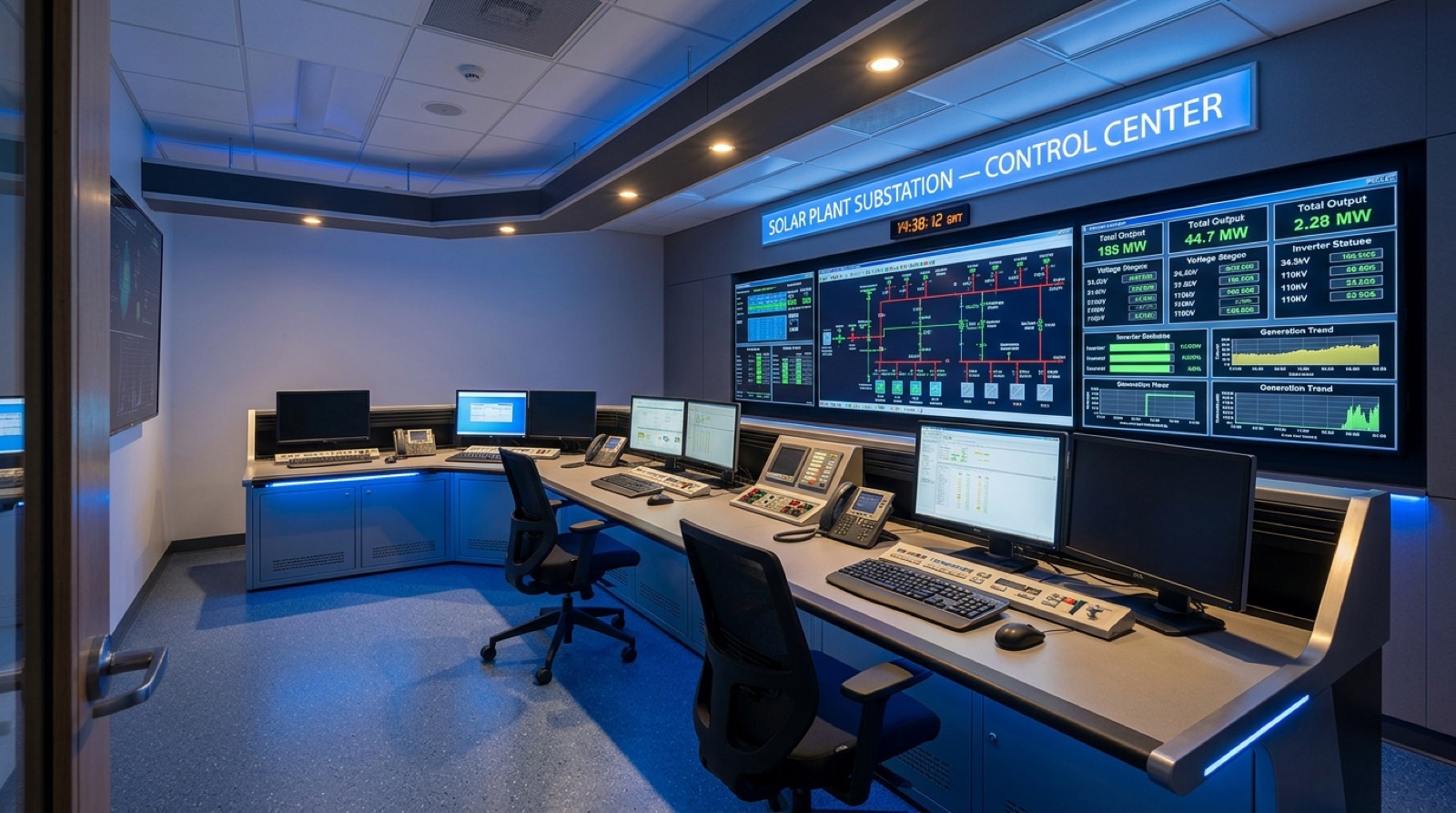
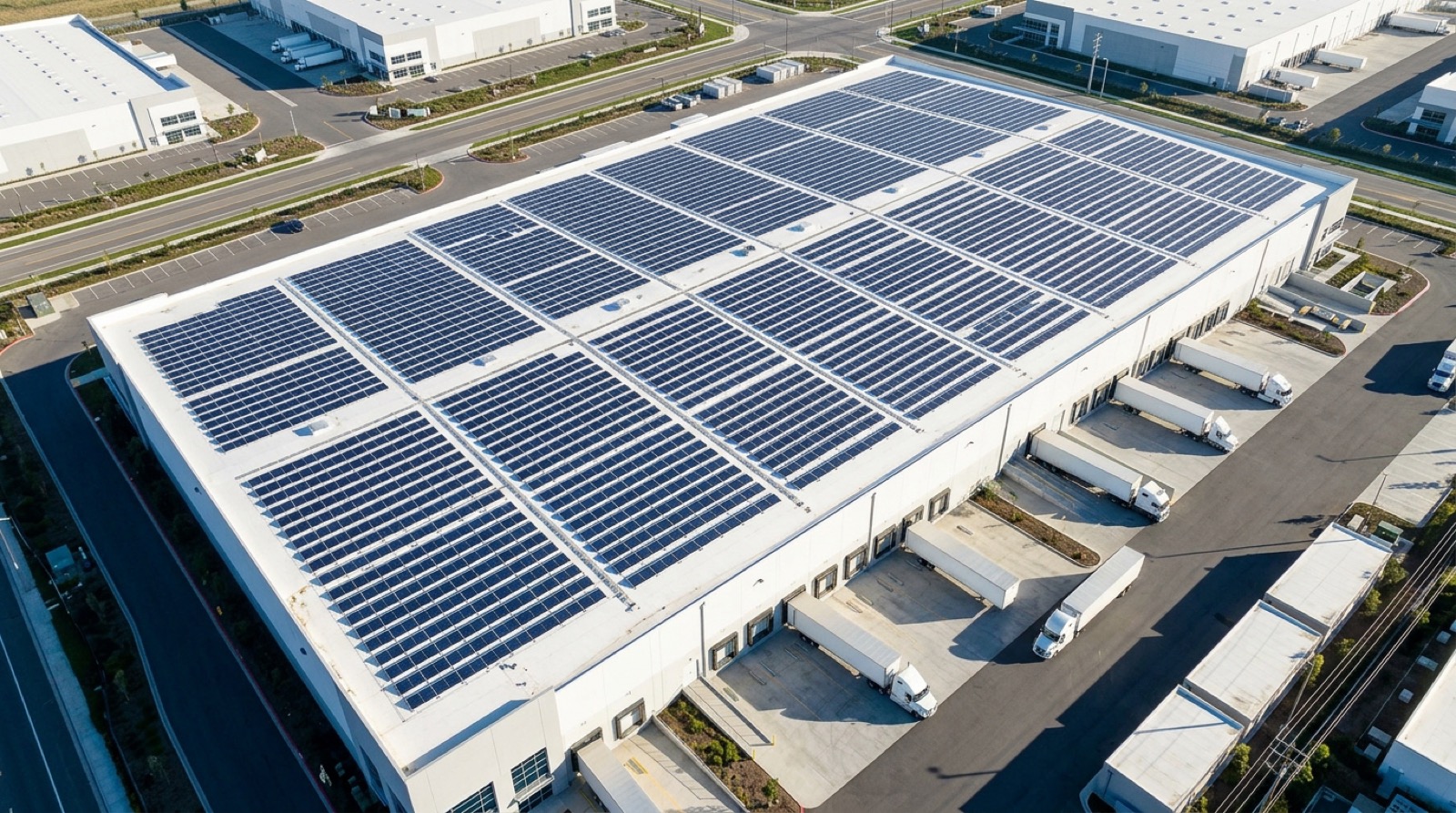
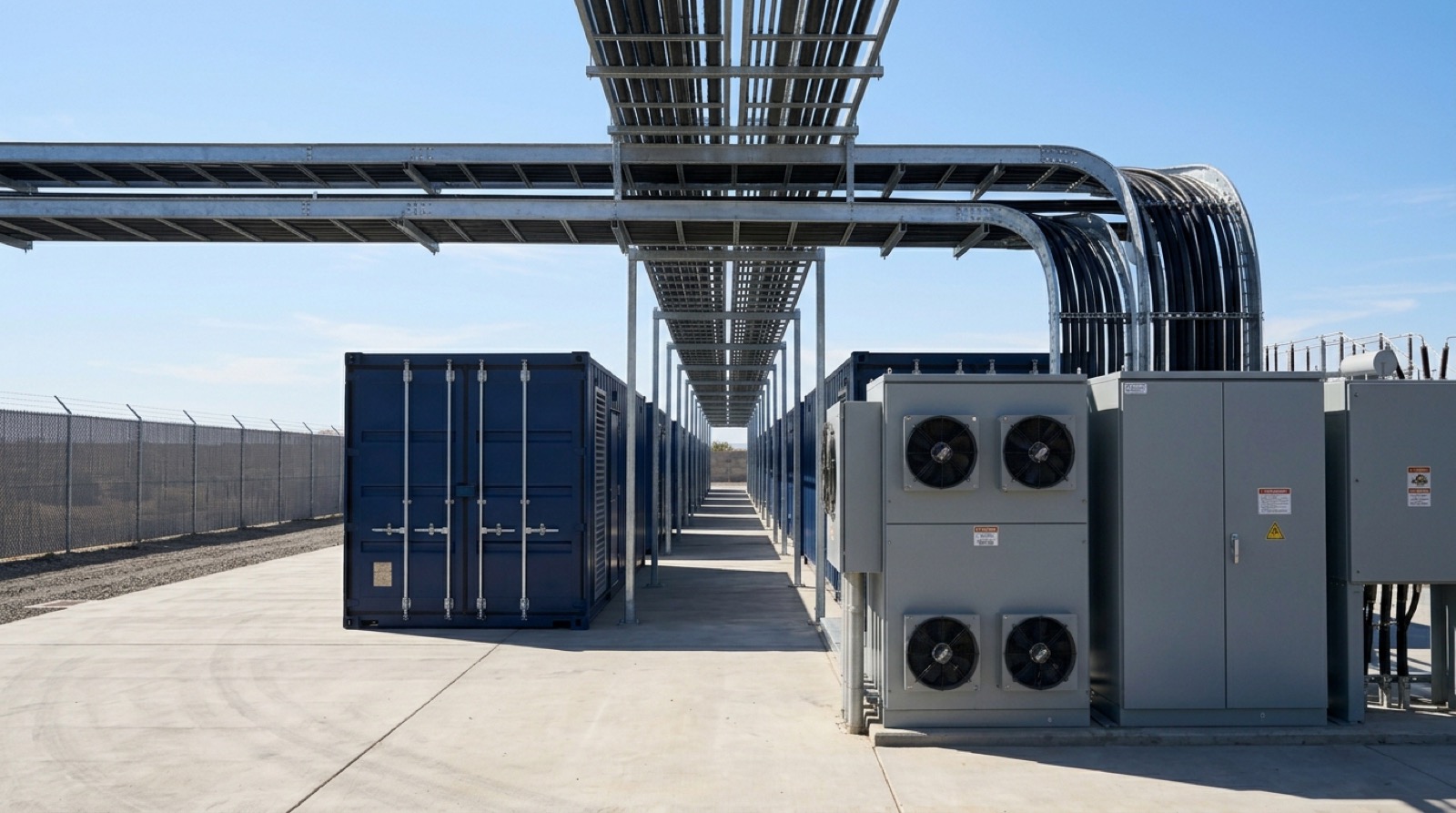
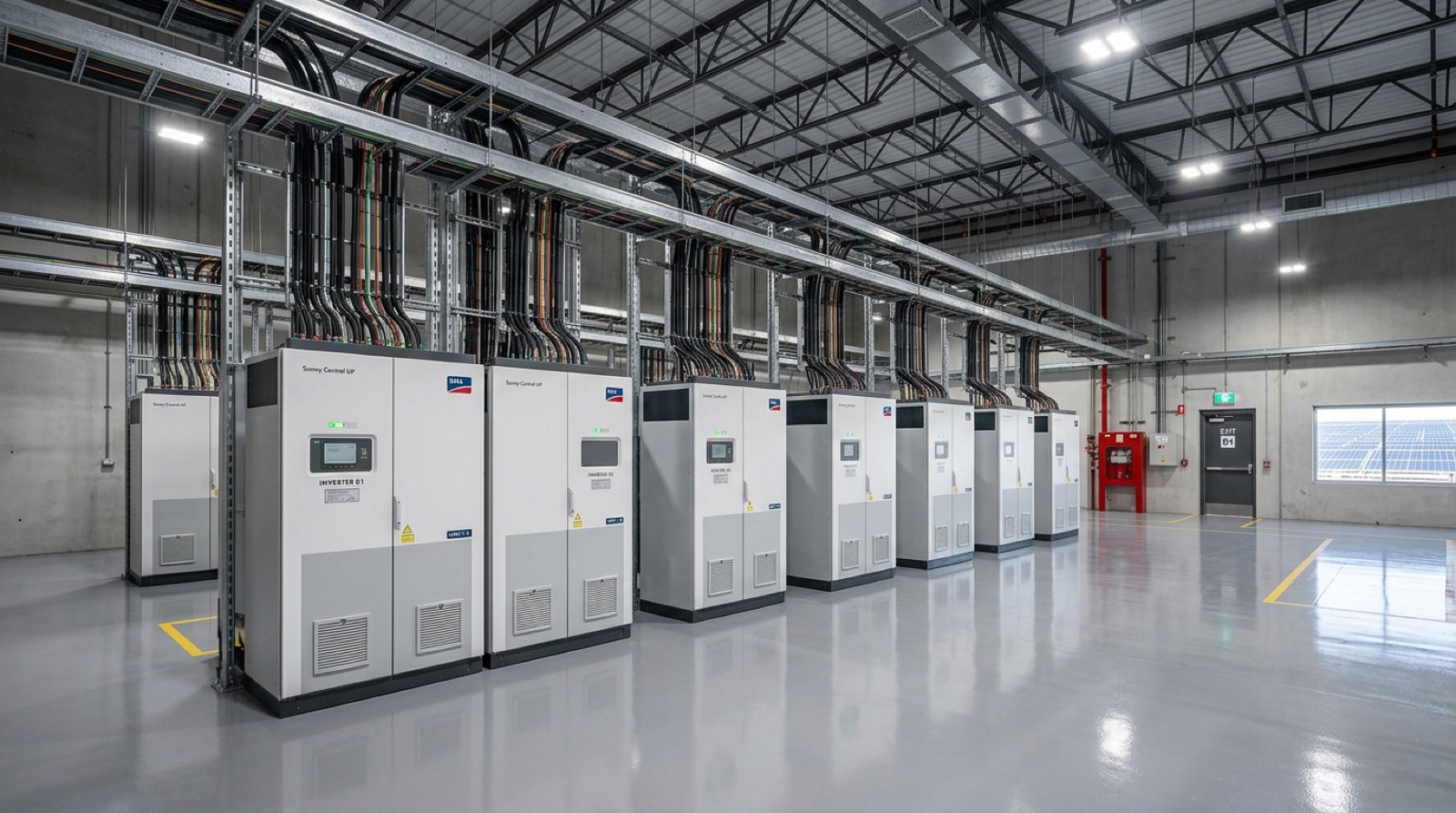

A 6 MWp rooftop + carpark PV system with 6 MWh of LFP storage powers a Bangalore IT campus with an embedded Tier III data centre — sized for a 4-month south-west monsoon, calibrated for power-quality buffering, and integrated with the existing N+1 diesel stack without disturbing data-hall uptime.
The site is a ~110,000 m² IT campus housing a 6,000-seat office facility and a 2.4 MW IT-load Tier III data centre. Total campus load runs at ~4.8 MW continuous with morning ramps to ~7.5 MW as offices warm up and HVAC peaks. BESCOM grid availability is reasonable, but power-quality events — voltage sags, frequency excursions, momentary outages — average ~22 per month on the local feeder. The diesel N+1 stack (3 × 1500 kVA) and existing static UPS modules carry the data hall through these events.
Two engineering constraints dominate: the south-west monsoon (June–September) drops effective irradiance by ~40% versus the dry-season months and brings sustained overcast that no rooftop PV system overcomes — so the system must earn its return in the other 8 months, with monsoon production treated as a bonus, not a baseline. And the Tier III data centre cannot tolerate a single moment of bus instability during retrofit — any cutover sequence affecting the data-hall ATS has to be rehearsed against the existing UPS topology and witnessed by the data centre operator.
The brief: maximise PV yield in 8 productive months without expecting monsoon production, specify BESS for power-quality buffering against the 22 events/month, not just for backup energy, integrate without disturbing the Tier III SLA at any point during retrofit, and register under India's group-captive / open-access solar policy framework.
The Bangalore brief inverted the conventional sizing exercise. Most IT-campus PV systems are sized for an energy target; this one was sized for power-quality ride-through first, with energy yield falling out as a consequence. The BESS PCS is specified as a power-quality device — a fast-acting STATCOM with a kWh backup — and the PV array's primary job is to keep that BESS charged and shave the daytime grid bill while doing so.
Three engineering decisions diverge from a typical 6 MWp commercial hybrid:
PV and BESS tie into the campus 11 kV bus upstream of the existing data-hall ATS scheme. The BESS PCS is the master frequency reference under any BESCOM disturbance below 10 seconds. Existing diesel N+1 and UPS modules unchanged.
Component selection is illustrative — final BoM in any binding TPC delivery is calibrated to BESCOM grid-code, IEEE 1547-2018, Tier III certification scope, roof and carpark structural survey, and the supplier list current at quote time.
| Component | Specification | Qty | Source |
|---|---|---|---|
| PV module | N-Type TOPCon · 580 W · 144-cell · IEC 61215 / 61730 · monsoon-rated frame | 10,345 | Factory-direct |
| Rooftop mounting | Aluminium 6005-T5, 12° tilt, ballast-engineered, EN 1991 monsoon wind | ~4.4 MWp | Factory-direct |
| Carpark canopy | Hot-dip galvanised steel, 20° tilt, monsoon-drainage geometry | ~1.6 MWp | Factory-direct |
| String inverter | 1500 V DC · 250 kW · IEC 62109 · IP66 · ambient extension to 55 °C | 26 | Factory-direct |
| LFP battery containers | 20-ft outdoor · 2 MWh per container · liquid-cooled · UL 9540A · IEC 62619 | 3 | Factory-direct |
| Grid-forming PCS | 3 MW · IEEE 1547-2018 · IEEE 2800 · STATCOM-grade reactive power · sub-50 ms transfer | 1 | Factory-direct |
| Hybrid plant controller | IEC 61850 + DCIM integration · grid-forming master · power-quality monitor · BESCOM compliance reporting | 1 | Factory-direct |
| 11 kV switchgear | SF6-free vacuum-break · IEC 62271 · PV/BESS feeder add, ATS-upstream tie | 1 lineup | Site-procured |
| DC combiner / SPDs | 1500 V Type II surge arresters, fused string combiners | 130 | Factory-direct |
| Cabling & earthing | 1500 V DC PV cable, MV armoured IEC 60502, IEC 62305 lightning protection (high storm regime) | ~8.2 km | Site-procured |
| Tier III preservation pack | Witness commissioning plan, ATS-untouched validation, data-hall operator sign-off documentation | 1 package | TPC engineering |
| Open-access registration | India group-captive / open-access policy registration, BESCOM single-line, metering documentation | 1 package | TPC engineering |
| Commissioning & performance test | FAT + SAT + IEC 61724 PR test + 12-month power-quality event capture report | 1 package | TPC engineering |
Monthly generation is computed from public NASA POWER irradiance for 13°N Bangalore, applied to the as-designed 6 MWp array at PR 0.78 — note the strong Jun–Sep monsoon trough that defines the system's commercial sizing constraint. Hover any bar for the underlying figure.
The Jun–Sep monsoon trough is unmistakable — Jul yield (~550 MWh) is barely half of March (~990 MWh). The sizing exercise excluded those four months entirely from the financial model. Power-quality value continues year-round; the grid-forming PCS sees more BESCOM events during the monsoon, not fewer. Annual yield of ~1,490 kWh/kWp is consistent with TANGEDCO / BESCOM reference data for fixed-tilt commercial installations in the Bangalore plateau.
Indian rooftop PV financial models that average monsoon and dry-season yield produce a P50 that fails to materialise in any single year — the dry-season over-performs the average; the monsoon under-performs. Modelling only the 8 productive months and treating monsoon as upside produced a P50 that the asset actually delivered against.
22 BESCOM events per month × 12 months × the cost of a single IT-load disruption far exceeds the kWh value of the 6 MWh storage. Specifying the PCS as a power-quality device first — STATCOM-grade reactive, sub-50 ms transfer, grid-forming under any sag — produced the larger commercial outcome. The energy arbitrage is the second-tier benefit.
Touching the data-hall ATS would have triggered a full Tier III re-certification surface — months of operator engagement, witness testing, and uptime risk. Tying the PV+BESS hybrid feeder upstream of the existing ATS preserved the certification envelope. The data hall sees a cleaner upstream supply but not a different downstream scheme.
Indicative imagery from the TPC delivery library. Site-specific photography is held under the engagement NDA and shared with qualified counterparties on request.
The data centre operator's first question wasn't about energy — it was "what changes for us downstream?" When the answer was "nothing — the ATS, the UPS, the genset coordination are all unchanged, you just see a cleaner upstream feed," the conversation moved on. That answer was the architecture. Everything else followed.Hybrid plant lead · IT-campus engagements · TPC engineering
Quote is illustrative of the engineering posture TPC brings to IT-campus hybrid engagements. This reference profile is not tied to a named or contracted client; site-specific testimonials are released only with the operator's signed consent under the engagement NDA.
IT-campus or data-centre hybrid, power-quality buffering, or monsoon-engineered PV sizing — TPC's engineering team will scope the same equipment envelope for your project under a one-business-day SLA.