Build photography
From factory floor to red-earth site.
Indicative imagery from the TPC delivery library. Site-specific photography is held under the engagement NDA and shared with qualified counterparties on request.
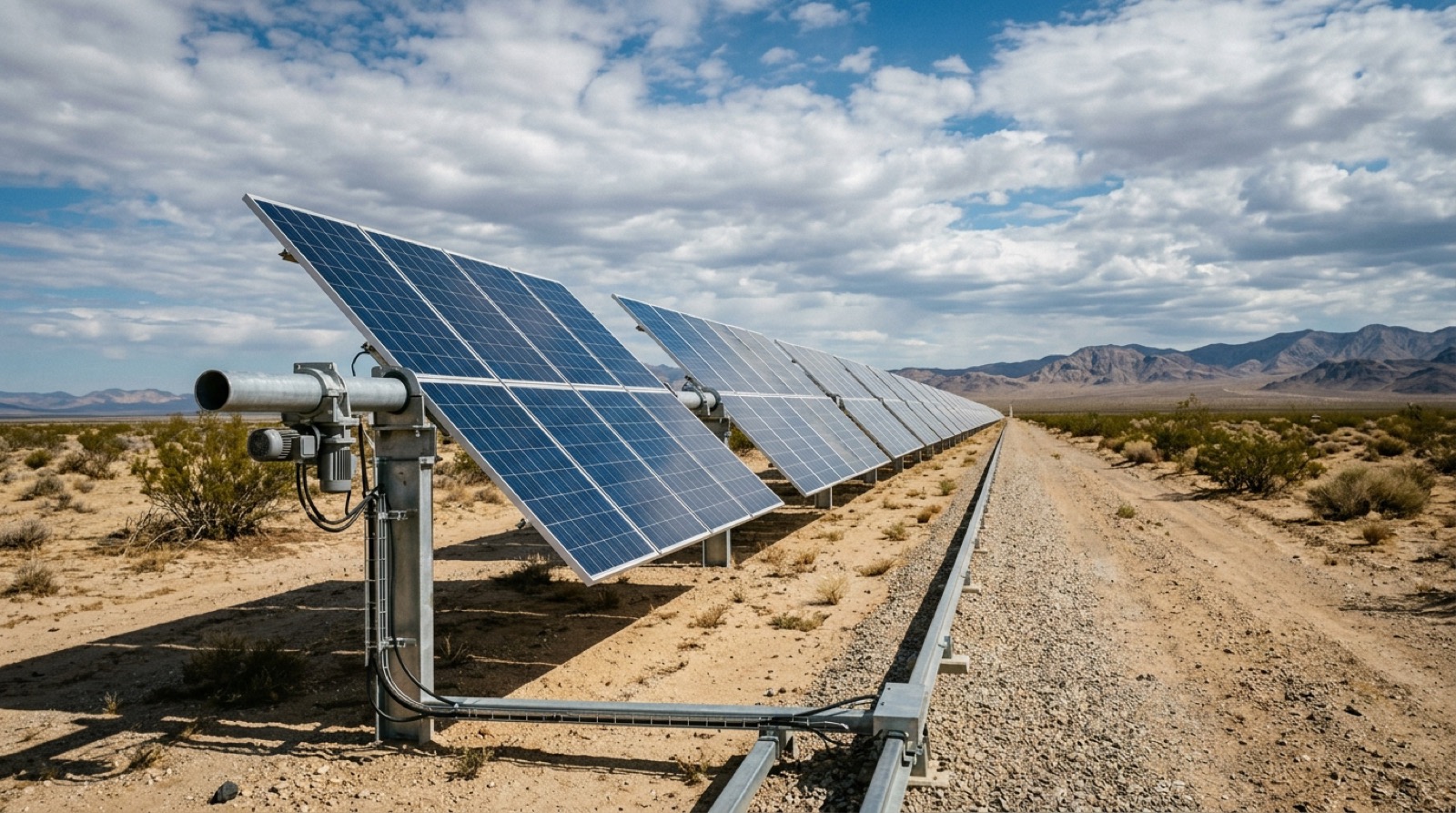
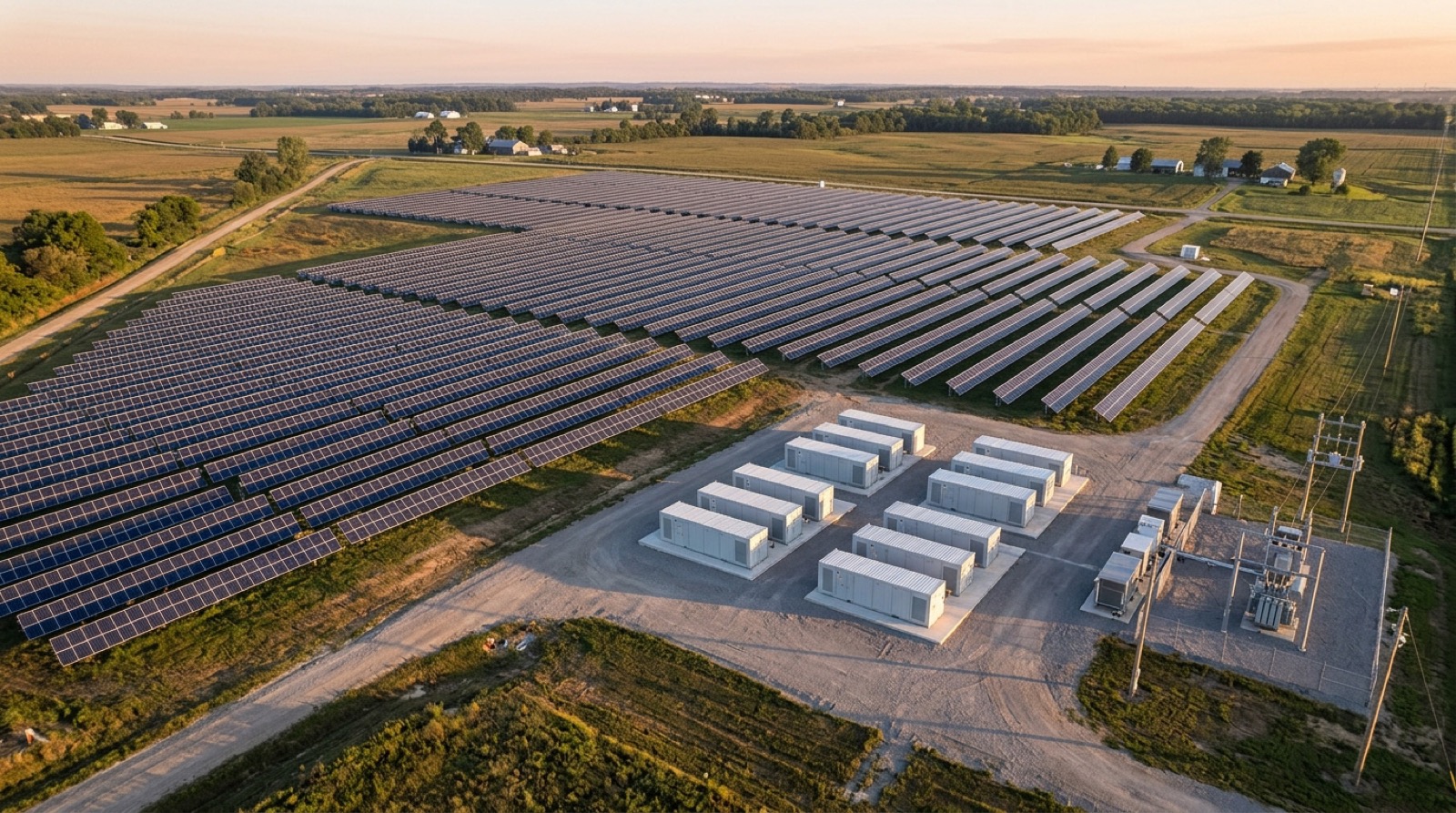
A 12 MWp single-axis tracking PV plant paired with 24 MWh of LFP storage forms an island-capable microgrid for a remote Pilbara mine site — running grid-forming through every solar hour, dropping the on-site diesel station to standby for ~9 hours a day, and saving an estimated 6.4 million litres of diesel a year.
The site is a remote Pilbara mine, ~1,400 km road-haul from Perth, with a contracted electrical baseline of ~17 MW continuous (peak ~24 MW) — comminution circuit, haul-truck workshop, accommodation village, water treatment, communications, and the perimeter security envelope. Pre-project the entire load was carried by an 11-set diesel station burning around 11.5 ML/yr at delivered cost north of A$1.55/L.
Three structural problems compounded: fuel logistics (each tanker convoy is a road-train movement booked weeks ahead, and one cyclone closure of the Great Northern Highway disrupts the entire month's schedule), diesel station de-rate at 45 °C ambient (real-world output from the rated nameplate sits 7–9 % lower than catalogue, eaten by parasitic cooling), and operator decarbonisation commitments tied to the parent company's Scope 1 target — every tonne of diesel CO2e on site is counted directly against the target.
The brief was demanding: be diesel-off every solar hour the weather permits, survive a cyclone-rated wind load (region D, 270 km/h gust), and integrate with the existing diesel station as a master controller — never as an auxiliary.
A typical mining solar add-on bolts a PV array onto an existing diesel station as a fuel-displacing auxiliary, leaving the diesel governor as plant master. The Pilbara brief inverted that hierarchy: the BESS is the system master through every solar hour, holding the bus voltage and frequency in island mode while the diesel station drops to hot-standby. Diesel sets only re-enter the bus when forecast solar is insufficient, when weather closes the array, or when load exceeds the BESS PCS rating.
Three engineering decisions diverge from a typical mine-solar retrofit:
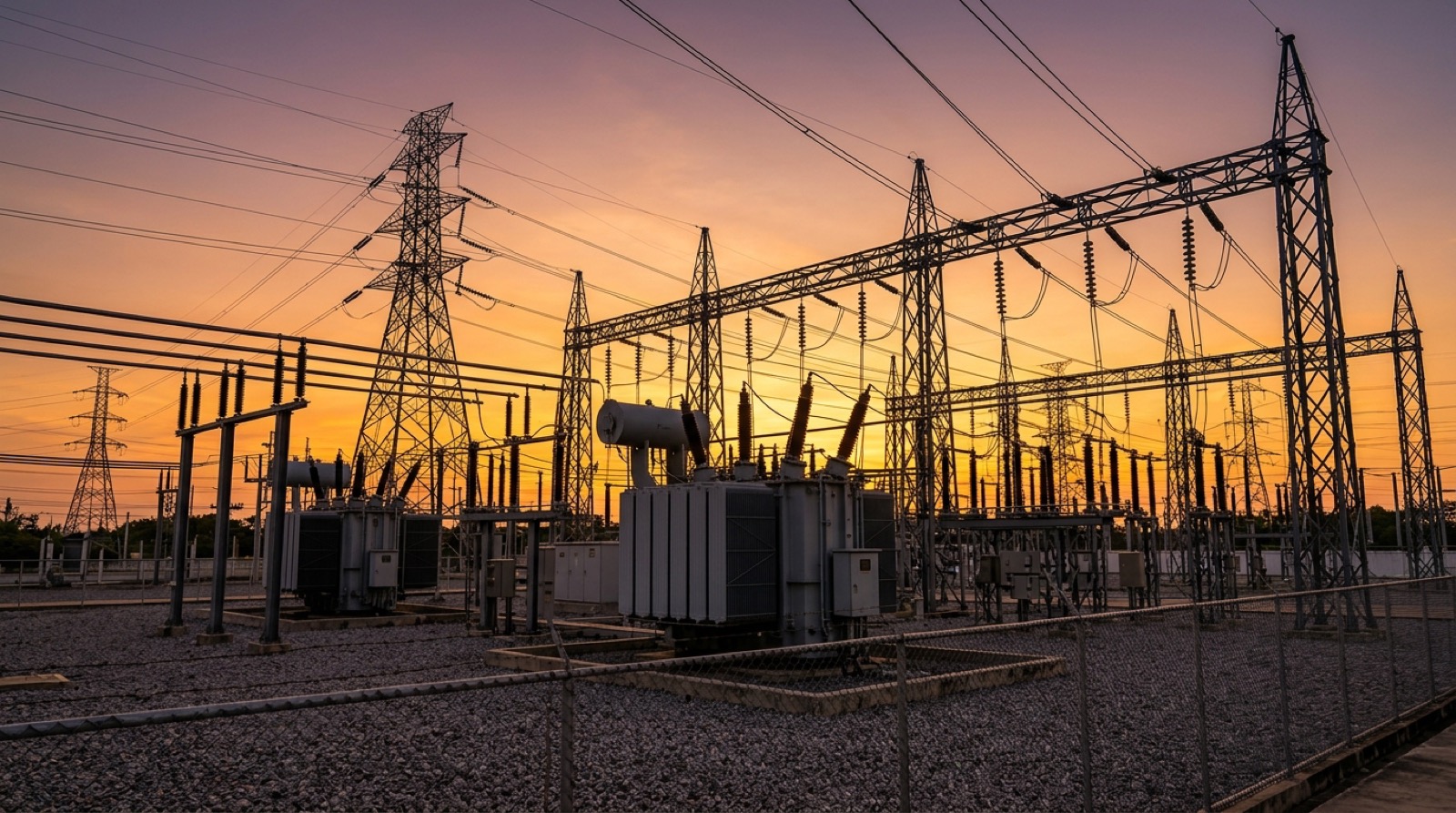
A common 33 kV bus carries every source and every sink: trackers, BESS, diesel station, and the mine's process and accommodation feeders. The BESS PCS is the master frequency reference through every solar hour; the diesel station picks up the bus when the BESS hands off, never the other way around.
Component selection is illustrative — final BoM in any binding TPC delivery is calibrated to mine power-system study, AS/NZS 4509 stand-alone power system requirements, AS 1170.2 wind region, and the EESS-approved inverter list current at quote time. Primary equipment ships factory-direct; site civils, piling, MV cabling, and HV scope are procured locally under TPC engineering supervision.
| Component | Specification | Qty | Source |
|---|---|---|---|
| PV module | N-Type TOPCon bifacial double-glass · 590 W · 132-cell · IEC 61215 / 61730 / 62804 | 20,340 | Factory-direct |
| Single-axis tracker | Distributed row architecture, ±60° tracking, cyclone-rated stow, battery-backed controller per row, AS/NZS 1170.2 region D | 282 rows | Factory-direct |
| Driven pile foundation | Steel C-section, hot-dip galvanised, 4.0 m, geotech-tested embedment for Pilbara red-earth pisolitic soils | 3,950 | Site-procured |
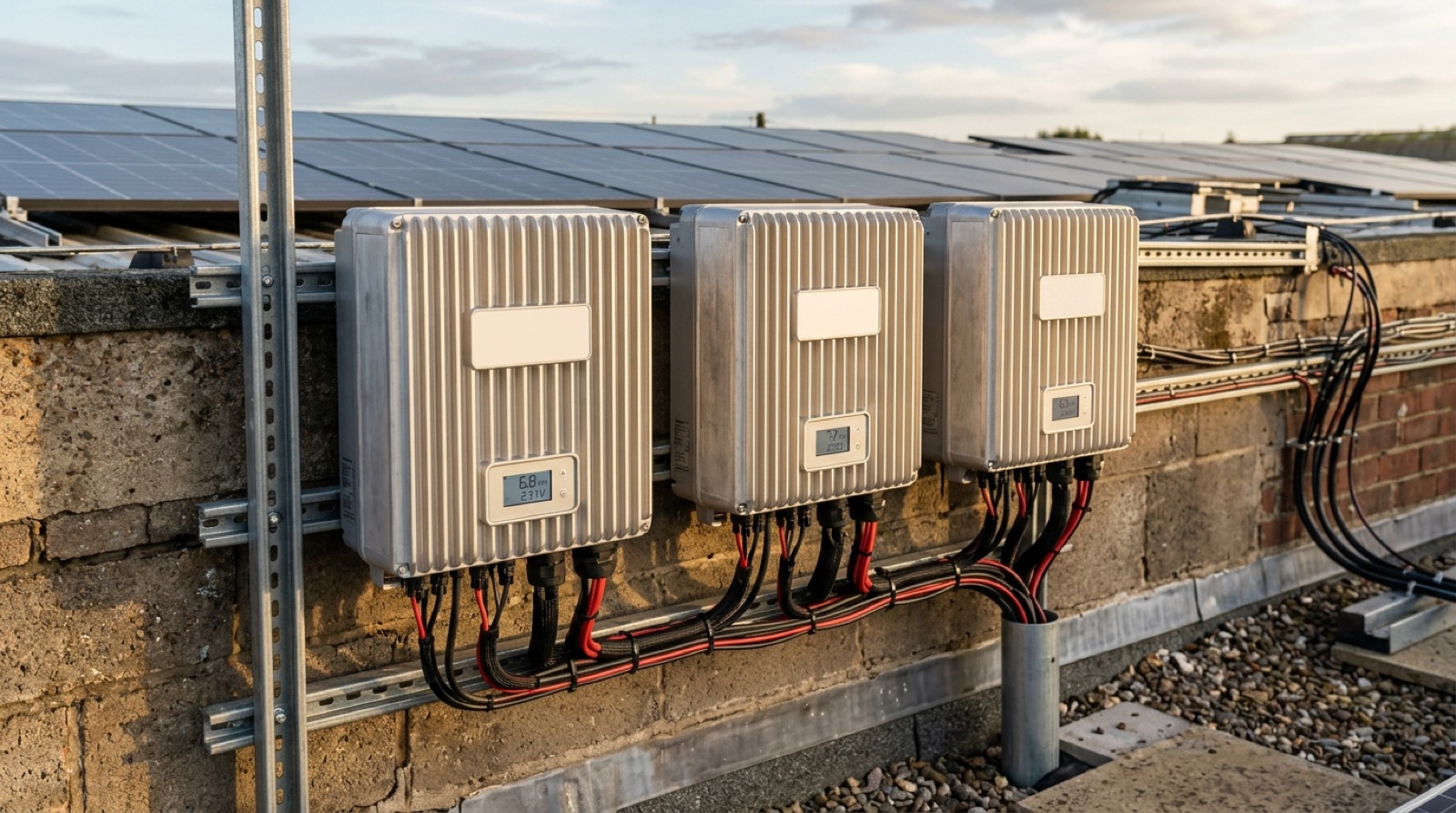
| String inverter | 1500 V DC · 350 kW utility · IEC 62109 · IEC 61727 · IP66 · −25 to +60 °C, AS/NZS 4777.2 listed | 36 | Factory-direct |
| MVPS skid | Pre-fab MV station: string inverter mount, 6 MVA dry-type 33 kV pad-mount transformer, MV switchgear, auxiliary AC/DC | 2 | Factory-direct |
| LFP battery containers | 40-ft outdoor container · 6 MWh per container · liquid-cooled · UL 9540A · IEC 62619 · AS/NZS 5139 | 4 | Factory-direct |
| Grid-forming PCS | 8 MW continuous / 16 MW 90-second overload · IEEE 2800 · virtual inertia & short-circuit current support · AS/NZS 4777.2 | 2 | Factory-direct |
| 33 kV ring main unit (RMU) | SF6-free vacuum-break · IEC 62271-200 · 24 / 36 kV · 630 A bus, mine-bus tie scheme | 8 | Factory-direct |
| Plant controller / SCADA | IEC 61850 · forecast-aware solar dispatch · diesel coordination · AS 4509 SAPS-compliant logic, lender-grade reporting | 1 | Factory-direct |
| Cyclone-rated tie-down | Engineered tie-down system to AS/NZS 1170.2 region D · 270 km/h gust, validated stow position windload | 1 lot | Site-procured |
| Robotic dry cleaning | Autonomous dry-brush units per tracker row, IoT telemetry, off-cycle nightly run | 282 | Factory-direct |
| HV / MV cabling | 33 kV XLPE armoured, 1500 V DC PV string cable, fibre-optic SCADA, AS/NZS 1429 / IEC 60502 | ~38 km | Site-procured |
| Civil & security | Bulk earthworks, perimeter security with thermal CCTV, gravel access road, BESS pad with NFPA 855 setback, control building | 1 lot | Site-procured |
| Diesel station integration | Mine power-system study, generator governor retune, master-slave handoff logic, witness sign-off | 1 package | TPC engineering |
| Commissioning & performance test | FAT + SAT + AS 4509 commissioning + 14-day capacity test + 12-month diesel-saved monitoring + lender-grade reporting | 1 package | TPC engineering |
Monthly generation is computed from public NASA POWER irradiance for ~22°S Pilbara, applied to the as-designed single-axis tracker spec at PR 0.78 with bifacial gain 1.06. Note the southern-hemisphere profile — peak in October / November, trough in May / June. Hover any bar for the underlying figure.
Cyclone season (Dec–Mar) introduces single-day generation losses when trackers are stowed pre-cyclone — captured in the modelled monthly figures via a 4-day annual stow-loss budget. The June trough is the binding case for diesel re-engagement: at ~1.40 GWh/month and 17 MW continuous load, BESS-only midday operation requires ~85 % of solar production hours with no cloud cover. The +18 % tracker uplift over fixed-tilt is what makes the diesel-off operating mode tractable through the southern-hemisphere winter.
Auxiliary-mode solar add-ons cap renewable penetration at ~25–30% because the diesel governor cannot release the bus. Specifying the BESS PCS as grid-forming master from day one — with the diesel station retuned for slave-follower operation — is what makes 9 hours/day of diesel-off operation achievable. It is a power-system architecture decision, not a procurement decision.
The trackers can structurally survive 270 km/h gusts at 0° stow — provided every single row reaches stow before the gust front arrives. Battery-backed row controllers and a forecast-fed pre-emptive stow trigger from the BoM cyclone watch feed are non-negotiable; comms-loss-fail-to-stow is the design rule. Two independent wind anemometers per tracker block keep the controls honest.
The financial model carries a 6.4 ML/yr direct fuel saving — a real number. The bigger commercial outcome rarely shown on the lender model is the resilience win: one cyclone-closed Great Northern Highway becomes a non-event for the mine when the BESS has 3 hours of bridging energy and the diesel station has its full pre-cyclone stockpile untouched. The fuel saved pays for the asset; the resilience pays for the mine plan.
Indicative imagery from the TPC delivery library. Site-specific photography is held under the engagement NDA and shared with qualified counterparties on request.
The day the diesel station went to zero output for the first time, the comminution circuit kept turning, the air-conditioners in the village kept running, and the haul-truck workshop didn't notice. That is the only way you know the BESS is the master and not an aspiration. From that morning, every solar hour the weather permits is a diesel-off hour — and that is what removes diesel-logistics risk from the mine plan, not what saves the litres on the invoice.Mine power systems lead · microgrid commissioning · TPC engineering
Quote is illustrative of the engineering posture TPC brings to remote off-grid mine microgrid engagements. This reference profile is not tied to a named or contracted client; site-specific testimonials are released only with the operator's signed consent under the engagement NDA.
Mine microgrid, remote off-grid hybrid, or grid-forming BESS for an industrial load — TPC's engineering team will scope the same equipment envelope for your project under a one-business-day SLA.