Build photography
From factory floor to cold storage roof.
Indicative imagery from the TPC delivery library. Site-specific photography is held under the engagement NDA and shared with qualified counterparties on request.
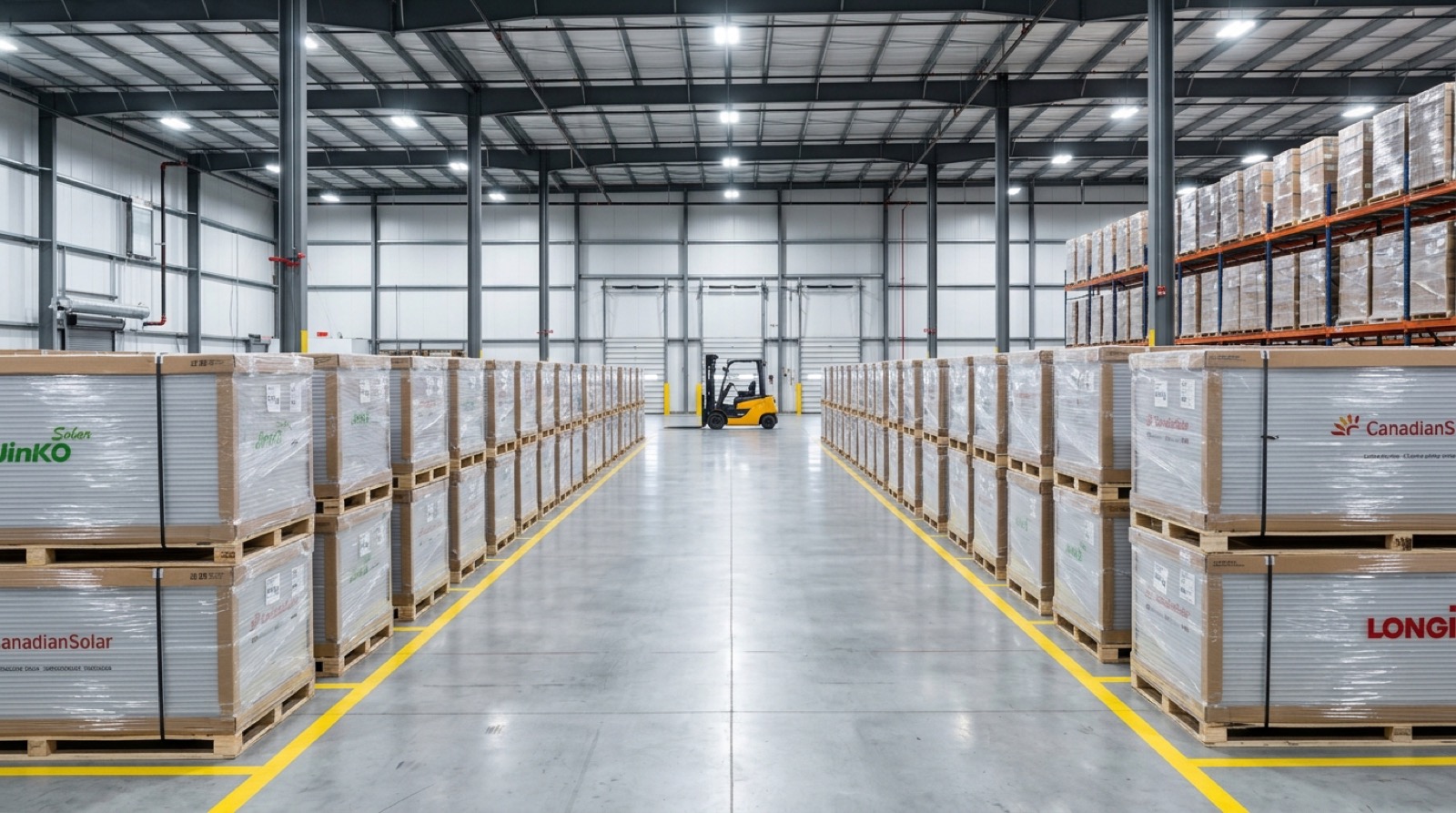
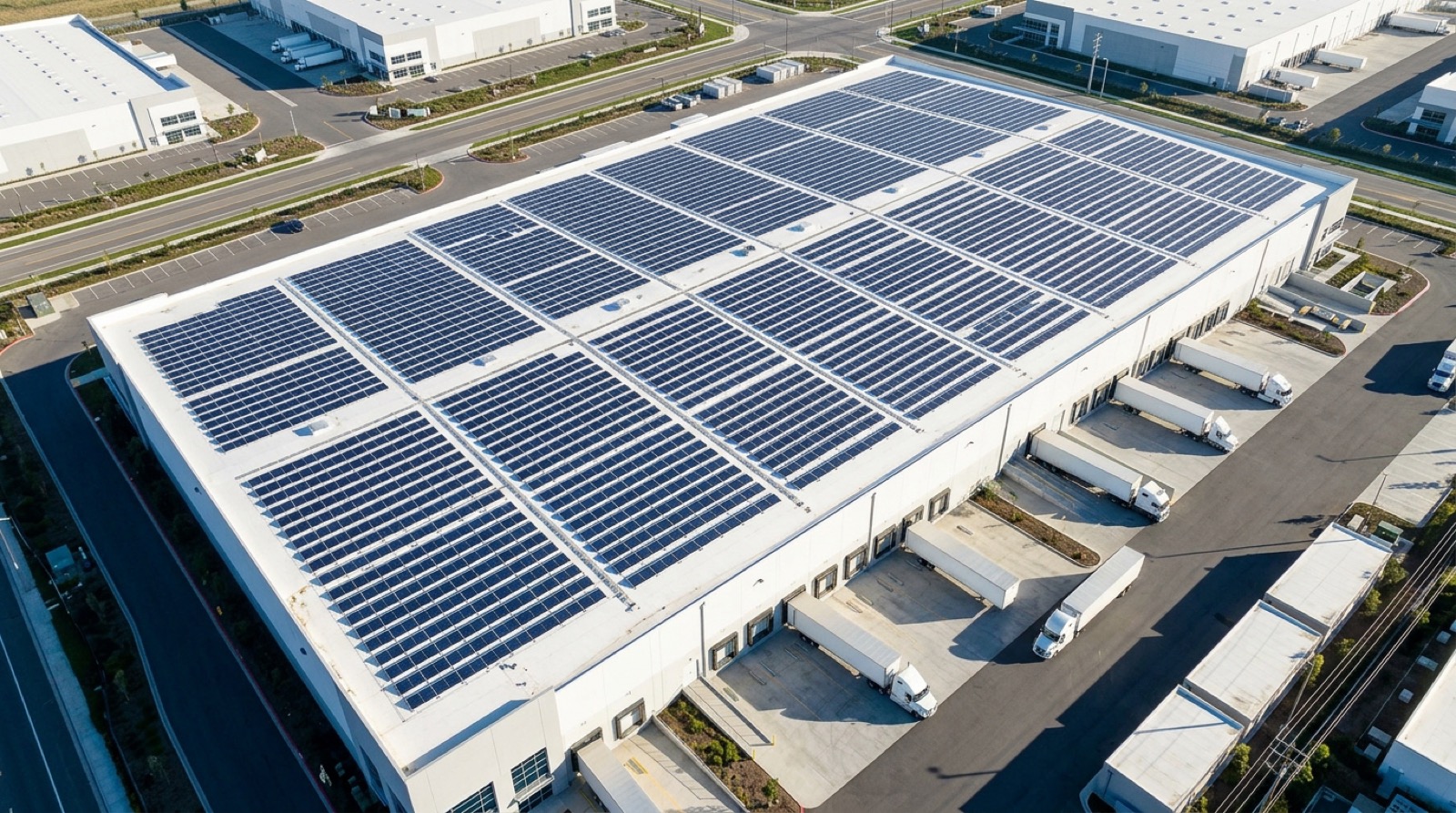
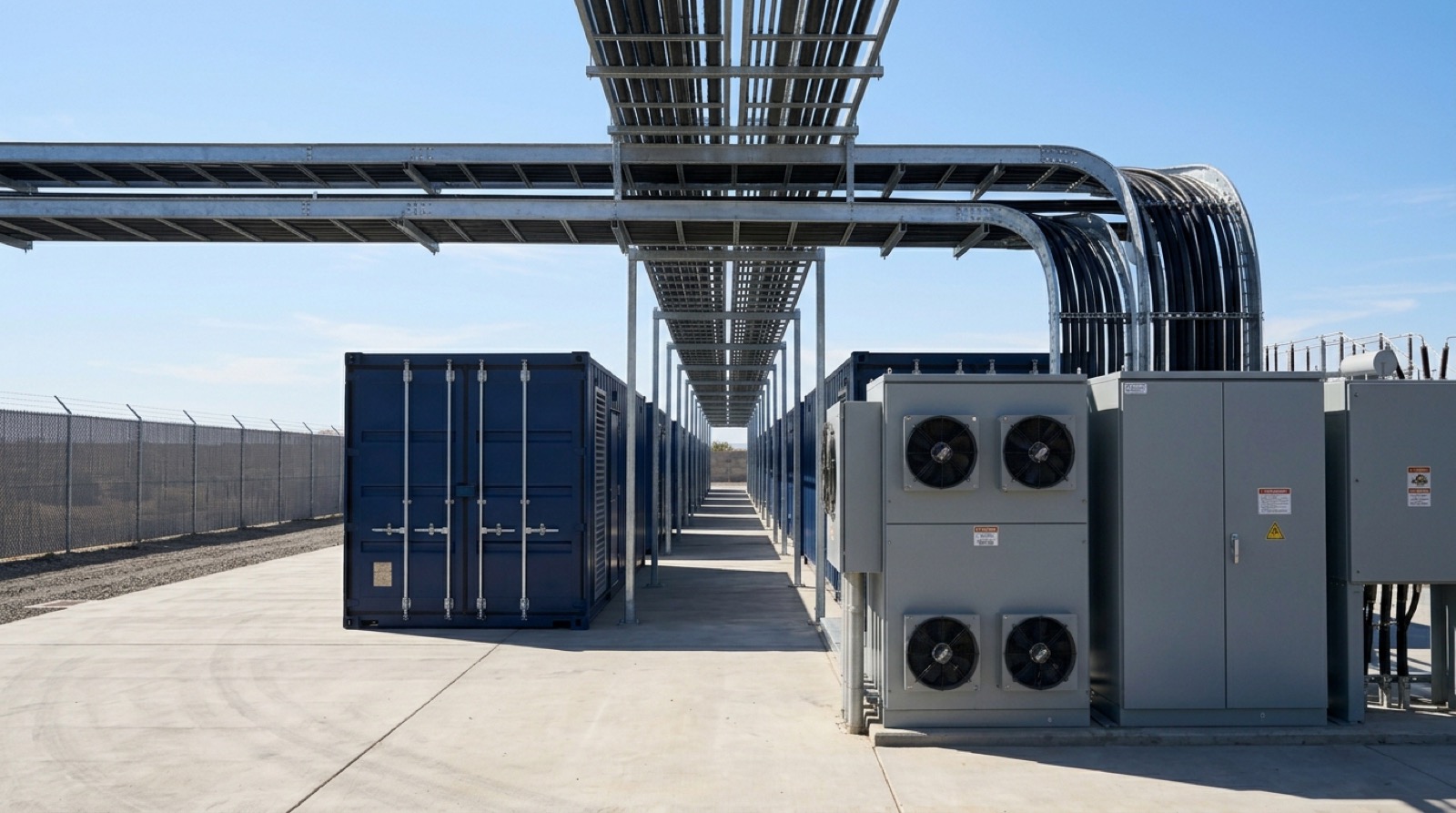
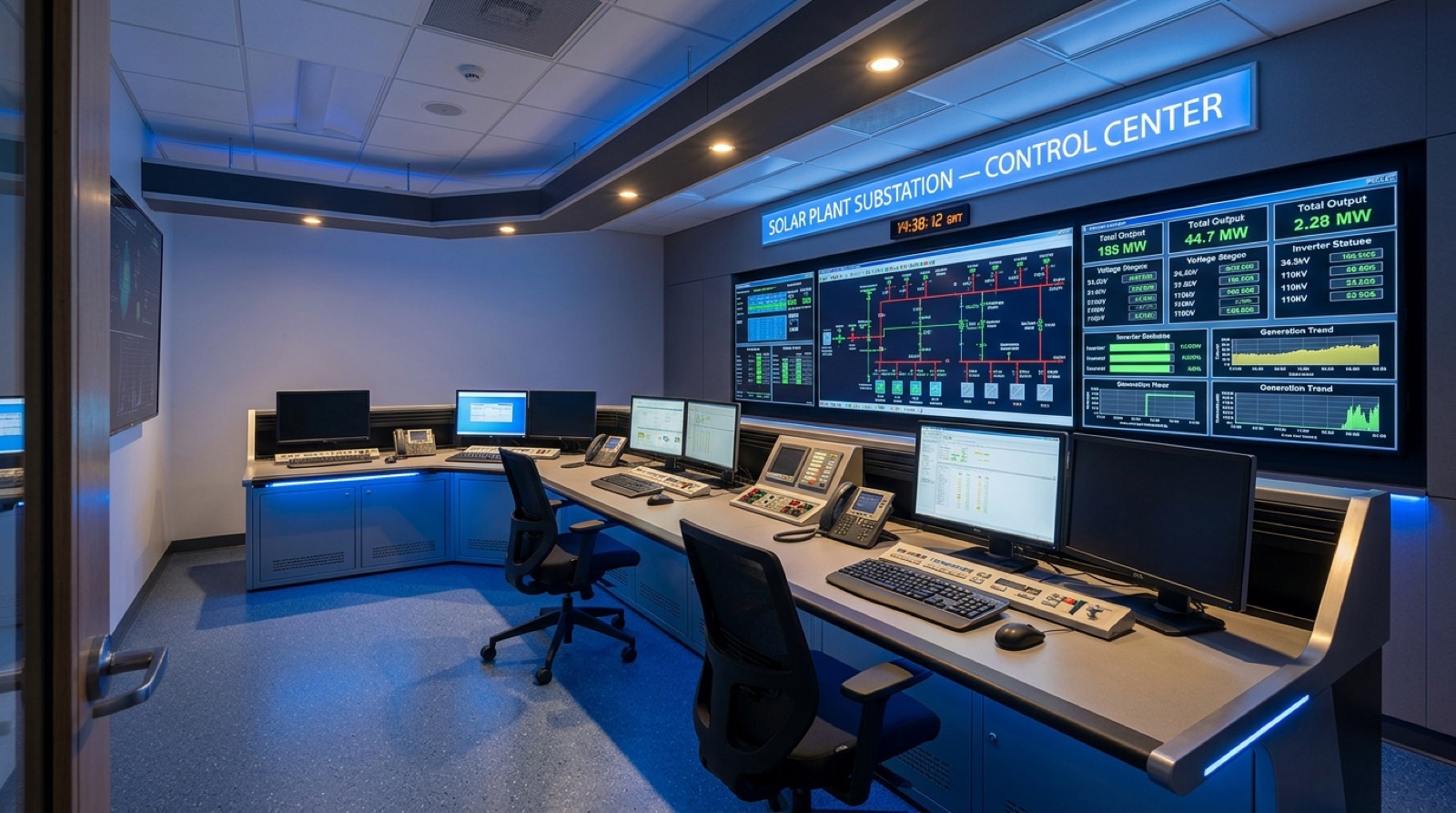
A 1.8 MWp rooftop PV + 4 MWh LFP system for a Madrid cold-storage facility uses the cold rooms themselves as thermal storage — pre-cooling against midday solar production by 1.5 °C, then coasting through evening peak-tariff hours without the compressors firing. Annual modelled yield ~2.7 GWh, RD 244/2019 self-consumption compliant.
The site is a 40,000 m² cold-storage facility running 24/7 at −25 °C across five insulated cold rooms. Compressor base load sits at ~720 kW continuous, climbing to ~1.2 MW during pallet-loading windows and ~1.4 MW during morning defrost cycles. The site is grid-only, on Spain's 6-tariff time-of-use rate with the peak P1 band running 10:00–14:00 and 18:00–22:00 weekdays — and a P6 valley overnight that's about 60% cheaper.
Two compounding problems: compressor load aligns with peak tariff (defrost cycles often land in the morning P1 band; product-loading often falls in the evening P1 band), and the cold rooms have substantial thermal mass that the existing controls don't exploit — the compressors cycle on a tight ±0.4 °C deadband around the set-point, ignoring any opportunity to pre-cool during cheap hours.
The brief: maximise PV self-consumption against the compressor load, use the cold rooms' own thermal mass as a second-tier energy buffer, shift evening P1-band kWh to a combination of solar, BESS, and pre-cooled thermal mass, and register the project under Spain's RD 244/2019 collective self-consumption framework.
Most PV-plus-storage retrofits in cold-storage treat the BESS as an electrical buffer only. The Madrid brief added a second buffer: the cold rooms themselves, treated as a thermal battery. By widening the compressor deadband from ±0.4 °C to −25 to −26.5 °C during cheap hours, the rooms can be pre-cooled into the floor of their food-safety envelope — then allowed to drift back toward the −25 °C ceiling during expensive hours without firing a single compressor.
Three engineering decisions diverge from a typical 1.8 MWp retrofit:
Electrical: PV, BESS and grid coupled at the LV main switchboard, feeding compressor switchgear. Thermal: the cold rooms act as the second-tier energy buffer with controlled deadband, governed by the EMS via the BMS interface — the architectural difference from a standard cold-storage retrofit.
Component selection is illustrative — final BoM in any binding TPC delivery is calibrated to roof structural survey, BMS retrofit scope, RD 244/2019 self-consumption framework, and the supplier list current at quote time. Primary equipment ships factory-direct; structural and controls scope is procured locally.
| Component | Specification | Qty | Source |
|---|---|---|---|
| PV module | N-Type TOPCon bifacial · 580 W · 144-cell · IEC 61215 / 61730 · low-temp coefficient | 3,103 | Factory-direct |
| Rooftop mounting | Aluminium 6005-T5, 25° tilt, ballast-engineered, EN 1991 wind region | ~1.8 MWp | Factory-direct |
| Hybrid string inverter | 1500 V DC · 200 kW · integrated PV + BESS PCS · IP66 | 9 | Factory-direct |
| LFP battery containers | 20-ft outdoor LFP · 2 MWh per container · liquid-cooled · UL 9540A · IEC 62619 | 2 | Factory-direct |
| Energy management system | EMS with 4-state arbitration (PV / BESS / grid / cold-room temp) · TOU optimiser · weather feed | 1 | Factory-direct |
| BMS retrofit (building management) | Cold-room temperature deadband retune, food-safety monitoring overlay, EMS API integration | 1 lot | Site-procured |
| Food-safety logger validation | 26 SKU-class temperature trace logs, signed-off cold-chain compliance documentation | 1 package | TPC engineering |
| LV switchboard retrofit | Main switchboard PV+BESS feeder add, anti-export limit, RD 244/2019 metering | 1 retrofit | Site-procured |
| DC combiner / SPDs | 1500 V Type II surge arresters, fused string combiners | 26 | Factory-direct |
| Cabling & earthing | 1500 V DC PV cable, LV armoured, IEC 60502 | ~2.6 km | Site-procured |
| RD 244/2019 registration | Self-consumption registration, single-line and metering documentation, distributor approval pack | 1 package | TPC engineering |
| Commissioning & performance test | FAT + SAT + 30-day load profile validation + thermal-storage controller tuning | 1 package | TPC engineering |
Monthly generation is computed from public NASA POWER irradiance for ~40°N Madrid, applied to the as-designed 1.8 MWp rooftop at PR 0.78 — note the strong continental seasonal swing typical of central Spain at this latitude. Hover any bar for the underlying figure.
The strong May–August plateau aligns with the highest compressor load of the year (summer ambient drives defrost frequency up). Annual cost saving comes from two stacked effects: ~50% of the cold-storage kWh is now PV or BESS, and the thermal-storage strategy shifts another ~14% of grid kWh out of P1 into P5/P6. Combined evening P1 cost drops 38%.
At 40,000 m² of insulated mass at −25 °C, the 1.5 °C deadband widening provides roughly the same daily energy-shift as a hypothetical 1.6 MWh additional electrical battery — at zero capex. The food-safety validation cost is the only line item that exists in that comparison, and it's a five-figure desktop study against a seven-figure storage capex.
Adding cold-room temperature as a fourth dispatch variable next to PV / BESS / grid took 6 weeks of post-commissioning tuning to reach the +220 bps IRR figure — most of it spent finding edge cases in the BMS API and reconciling the EMS's tariff-window awareness with the BMS's product-compliance constraints. The hardware is generic; the tuning is the asset.
Spain's self-consumption framework is favourable but documentation-heavy. The collective self-consumption registration, the distributor approval pack, and the metering single-line all have prescribed forms and review windows that don't compress easily. Treating it as a Phase 1 deliverable (alongside structural survey) — not as a closing checklist — was the difference between a 9-month and a 14-month schedule.
Indicative imagery from the TPC delivery library. Site-specific photography is held under the engagement NDA and shared with qualified counterparties on request.
The cold rooms had been thought of as a load for thirty years. The moment we let them act as storage instead, the entire commercial model of the project changed. The battery you can see on the slab is half the storage. The other half is the building itself.Hybrid plant controls lead · cold-chain engagements · TPC engineering
Quote is illustrative of the engineering posture TPC brings to cold-chain hybrid engagements. This reference profile is not tied to a named or contracted client; site-specific testimonials are released only with the operator's signed consent under the engagement NDA.
Cold-chain or industrial-thermal PV+storage retrofit, time-of-use tariff optimisation, or thermal-mass coupling for energy-shift — TPC's engineering team will scope the same equipment envelope for your project under a one-business-day SLA.