Build photography
From factory floor to airside roof.
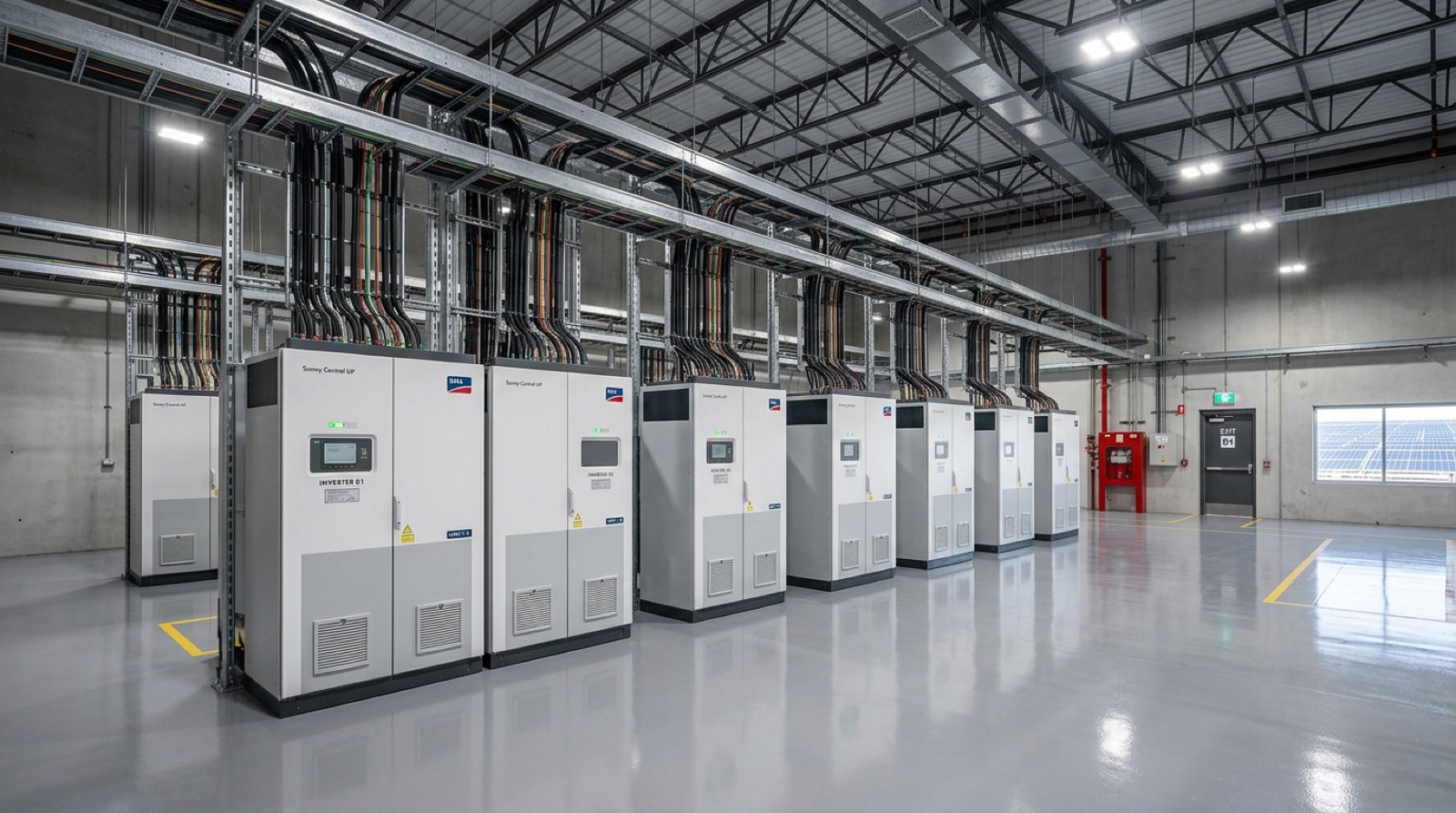
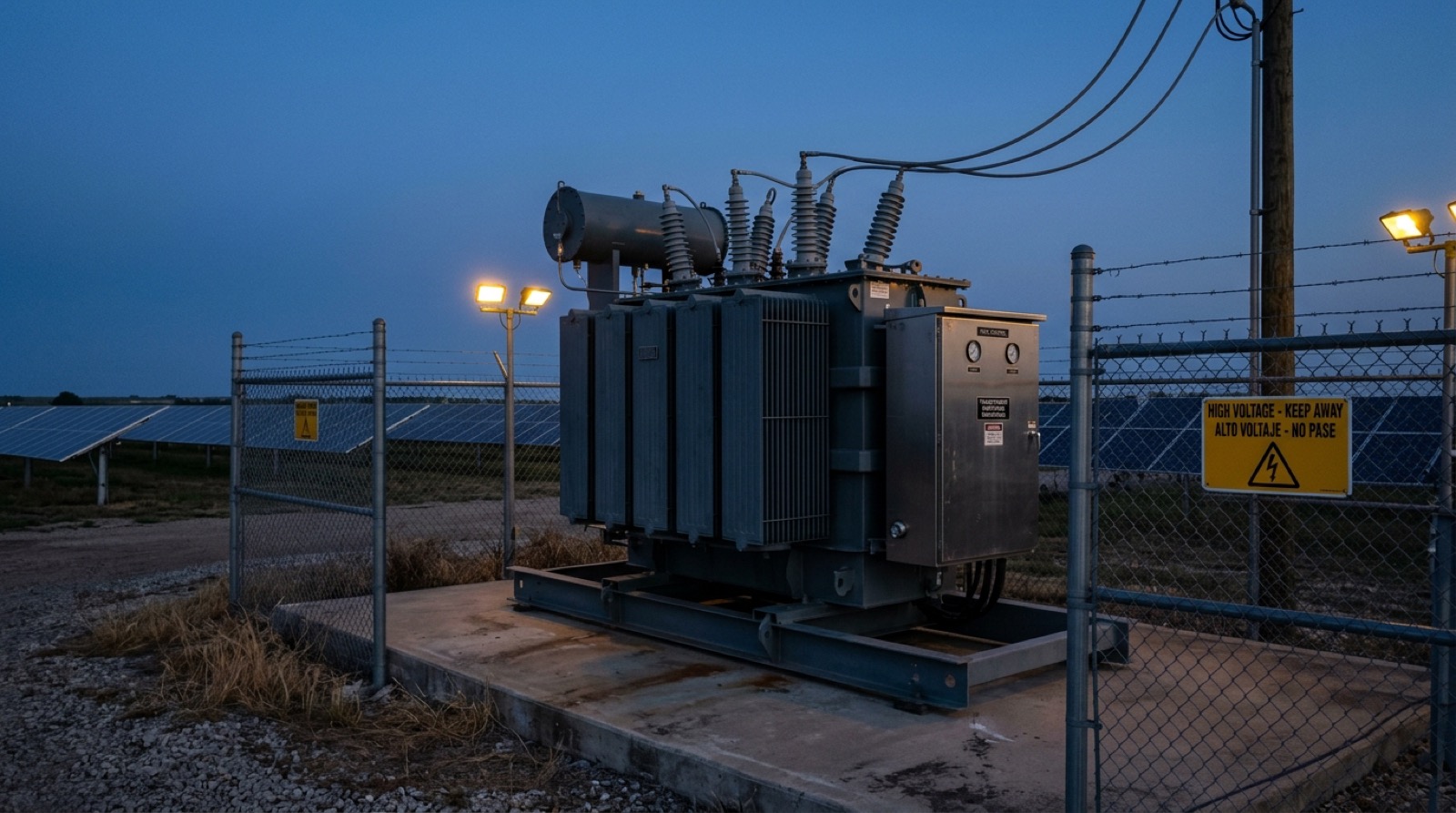
Indicative imagery from the TPC delivery library. Site-specific photography is held under the engagement NDA and shared with qualified counterparties on request.
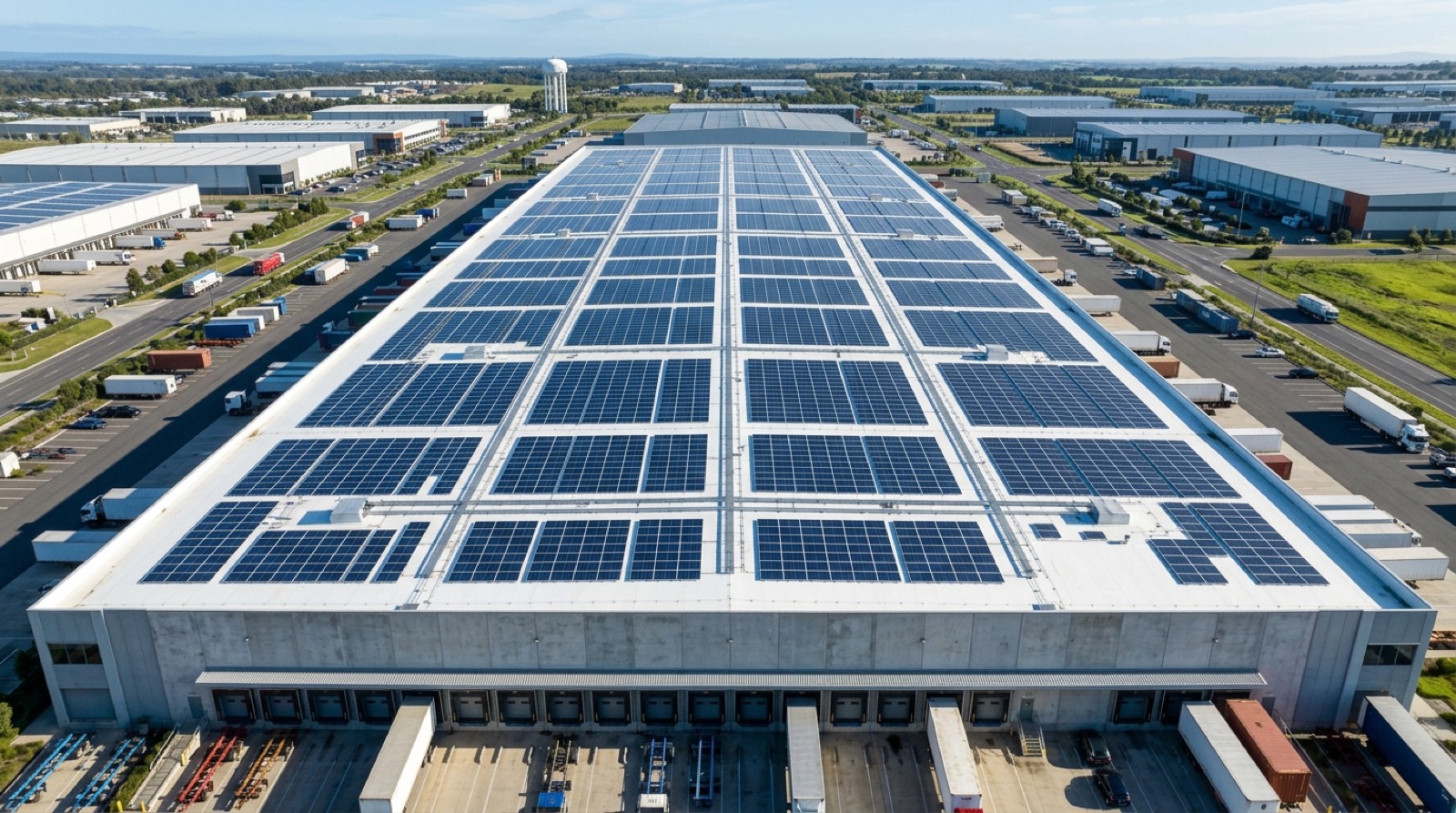
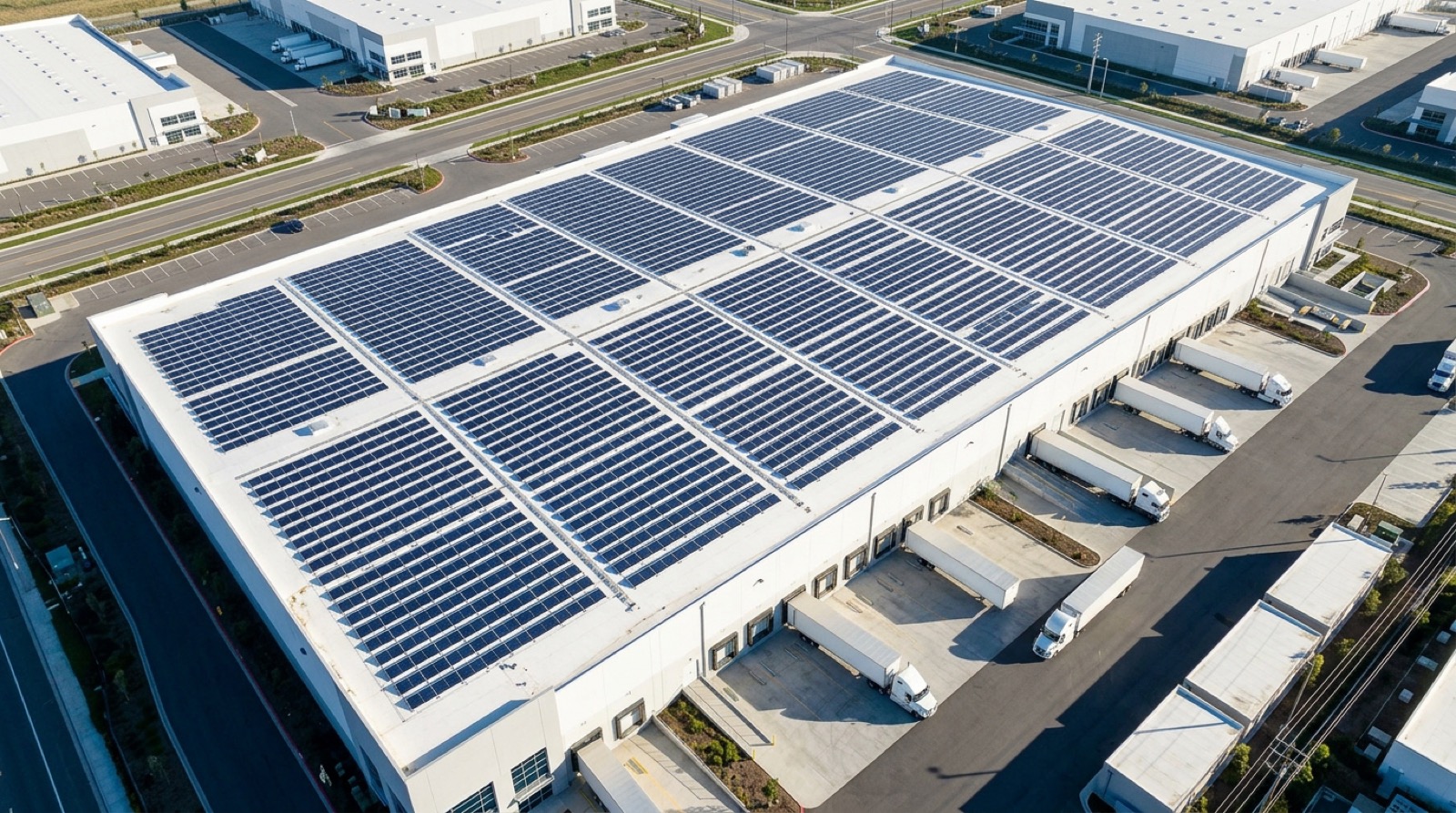
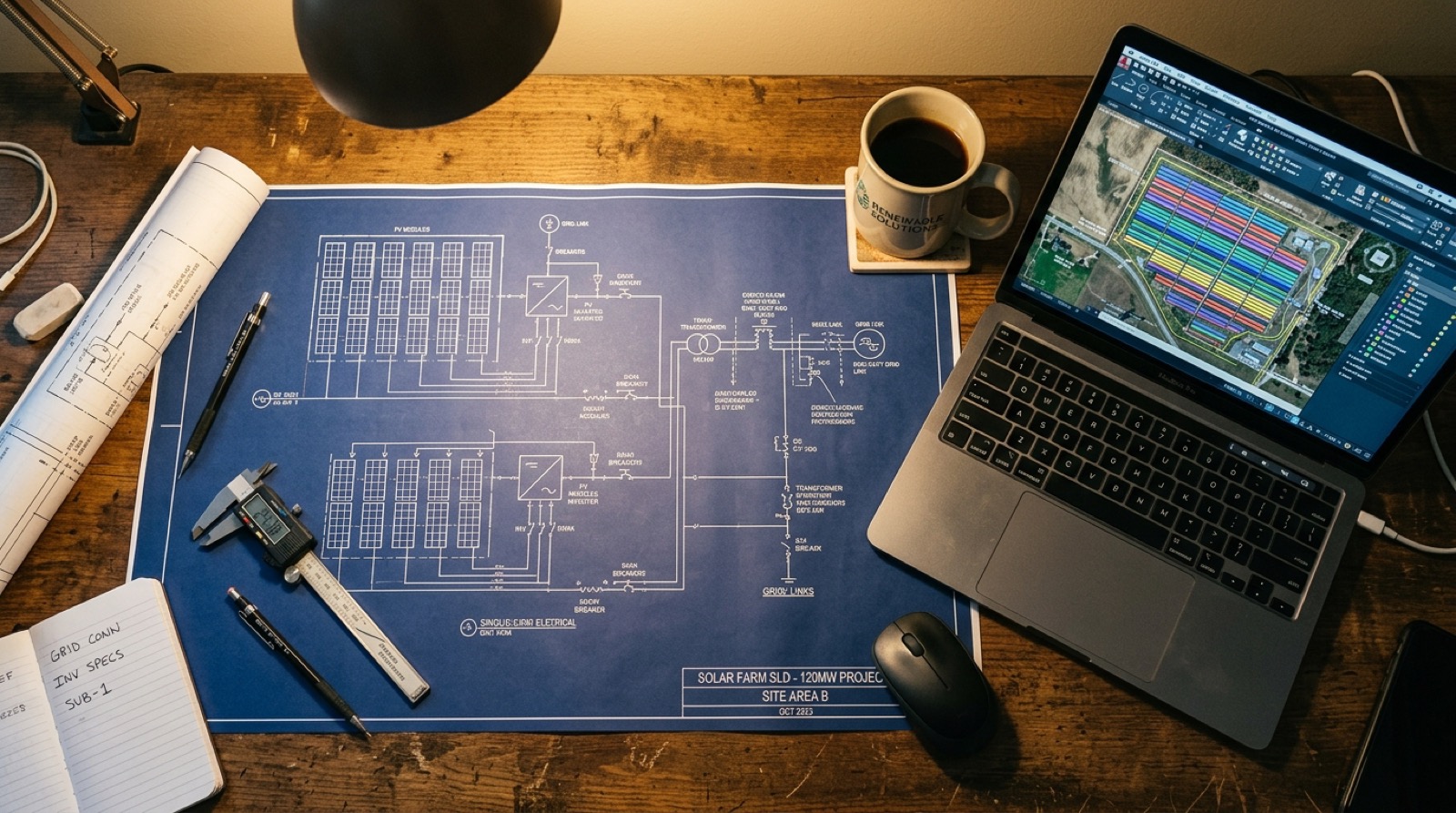
An 8 MWp rooftop + carpark-canopy PV system across a Dubai airport cargo and ground-operations precinct delivers ~14.7 GWh/yr of DEWA-tariff-displacing energy — engineered through a regulator-grade glare study, RFI assessment, and wind-load review coordinated with the airport authority.
The precinct is a cargo terminal and ground-operations campus inside the operational boundary of Dubai's airport — five large flat-roof buildings totalling ~62,000 m² of useable roof plus an adjacent 18,000 m² staff carpark. The base load across the precinct is 3.6 MW continuous with a midday peak around 5.8 MW driven by cargo refrigeration, conveyors, MEP plant and air-conditioning.
The technical problem isn't sizing — DEWA tariffs, roof structural capacity, and load curve all point at an 8 MWp envelope with high self-consumption. The hard problem is airport-authority approval: every square metre of glass-faced module within line-of-sight of any control tower or active taxiway requires an FAA-style ocular impact (glare) assessment, RFI study (panel-frame and inverter EMI against navaid frequencies), and a civil-aviation-grade wind-load review on the canopy structure. The system was approvable in principle from day one; the schedule was driven by the regulator-grade documentation pack.
The brief: maximise rooftop and canopy PV without disturbing a single airside operation, produce documentation the airport authority signs off on the first submission, and commission through staged energisations that never overlap with a cargo peak window.
A normal commercial rooftop PV project sequences engineering → procurement → construction → regulator approval. An airside project inverts that: the regulator's approval pack is the first major deliverable, and every engineering decision downstream is constrained by what that pack can defend. Module choice, tilt angle, canopy geometry, inverter placement, cable routing — all are validated against the glare model and the RFI study before any procurement is committed.
Three engineering decisions diverge from a typical 8 MWp rooftop:
Five rooftop arrays and the carpark canopy feed three centralised MV rooms with clustered string inverters, then aggregate to the precinct 11 kV switchboard and the DEWA grid tie. Anti-glare modules everywhere; inverter EMI containment in the MV rooms only.
Component selection is illustrative — final BoM in any binding TPC delivery is calibrated to airport authority approvals, DEWA interconnection conditions, roof structural survey, and the supplier list current at quote time.
| Component | Specification | Qty | Source |
|---|---|---|---|
| PV module — anti-glare | N-Type TOPCon · 575 W · 144-cell · matte diffusive front glass · IEC 61215 / 61730 · <0.5% specular | 13,920 | Factory-direct |
| Rooftop ballasted mounting | Aluminium 6005-T5, 10° tilt, ballast-engineered to structural survey, EN 1991 wind region | ~6.4 MWp | Factory-direct |
| Carpark canopy structure | Hot-dip galvanised steel, 12° tilt, 2-bay cantilever, 2,500 mm clearance, cyclone-margin wind-rated | ~1.6 MWp | Factory-direct |
| String inverter | 1500 V DC · 250 kW utility · IEC 62109 · IEC 61727 · IP66 · EMI Class A shielded | 32 | Factory-direct |
| MV transformer | Dry-type cast resin · 3 MVA · 11 kV · IEC 60076 · indoor MV room install | 3 | Factory-direct |
| 11 kV switchgear | SF6-free vacuum-break · IEC 62271-200 · 24 kV · DEWA tie compliant | 1 lineup | Factory-direct |
| Plant controller / SCADA | IEC 61850 · grid-code Q, P/F, DEWA reporting, anti-export limit | 1 | Factory-direct |
| Glare study / RFI study | FAA-style ocular impact assessment · 2 tower line-of-sight cases · RFI EMI assessment of MV rooms | 1 package | TPC engineering |
| Wind-load review | Cyclone-margin civil engineering review · canopy + ballast verification · airport authority sign-off | 1 package | TPC engineering |
| DC combiner / SPDs | 1500 V Type II surge arresters, fused string combiners | 176 | Factory-direct |
| Cabling & earthing | 1500 V DC PV cable, MV armoured IEC 60502, IEC 62305 lightning protection | ~12 km | Site-procured |
| Staged energisation plan | 11 zones · 4-hour windows · no cargo peak overlap · airport authority witness | 1 package | TPC engineering |
| Commissioning & performance test | FAT + SAT + IEC 61724 PR test + 12-month performance reporting | 1 package | TPC engineering |
Monthly generation is computed from public NASA POWER irradiance for 25°N Dubai, applied to the as-designed 8 MWp array at PR 0.78 — including the ~1.4% yield penalty of anti-glare front-glass over standard AR coating. Hover any bar for the underlying figure.
The April–May plateau matches the precinct's midday cargo-refrigeration peak — self-consumption sits above 96% in those months. June–August summer thermal de-rating costs ~3% of nameplate yield, partly offset by the carpark canopy's lower module operating temperature versus rooftop ballast. Net annual self-consumption against precinct load is >88%; the residual exports to DEWA under net-billing.
An 8 MWp rooftop within an airport boundary is a regulatory project that happens to include solar engineering, not the other way around. Glare study, RFI study, and wind-load review were treated as Phase 1 deliverables — every downstream procurement decision was constrained by what those three studies could defend on the first regulator submission.
Centralising inverters into 3 MV rooms collapsed the RFI-assessment surface area from 22 separate rooftop locations to 3 shielded indoor spaces. The capex premium was paid back in approval-cycle time saved against the alternative of running EMI assessment on every roof.
The 11-stage energisation plan was written against the airport's flight schedule, not against the EPC schedule. Each stage closed inside a verified low-demand 4-hour window agreed with operations; no cargo peak ever saw a switching operation. The 22-month concept-to-COD timeline includes that operational coordination cost — which on a non-airport site would have been a 30% schedule reduction.
Indicative imagery from the TPC delivery library. Site-specific photography is held under the engagement NDA and shared with qualified counterparties on request.
The airport's controlling question was never "does it generate?" It was "is it safe for our operation?" Once the glare study, the RFI study, and the wind review answered that on the first pass, every other engineering decision had room to breathe. Designing for regulator approval and designing for energy yield are the same exercise — they only feel different to people who haven't done it before.Airside engineering lead · transport-precinct PV · TPC engineering
Quote is illustrative of the engineering posture TPC brings to airport-precinct rooftop engagements. This reference profile is not tied to a named or contracted client; site-specific testimonials are released only with the operator's signed consent under the engagement NDA.
Airport or transport-precinct PV, regulator-grade glare and RFI studies, or staged-energisation under operational constraints — TPC's engineering team will scope the same equipment envelope for your project under a one-business-day SLA.