Build photography
From factory floor to data hall.
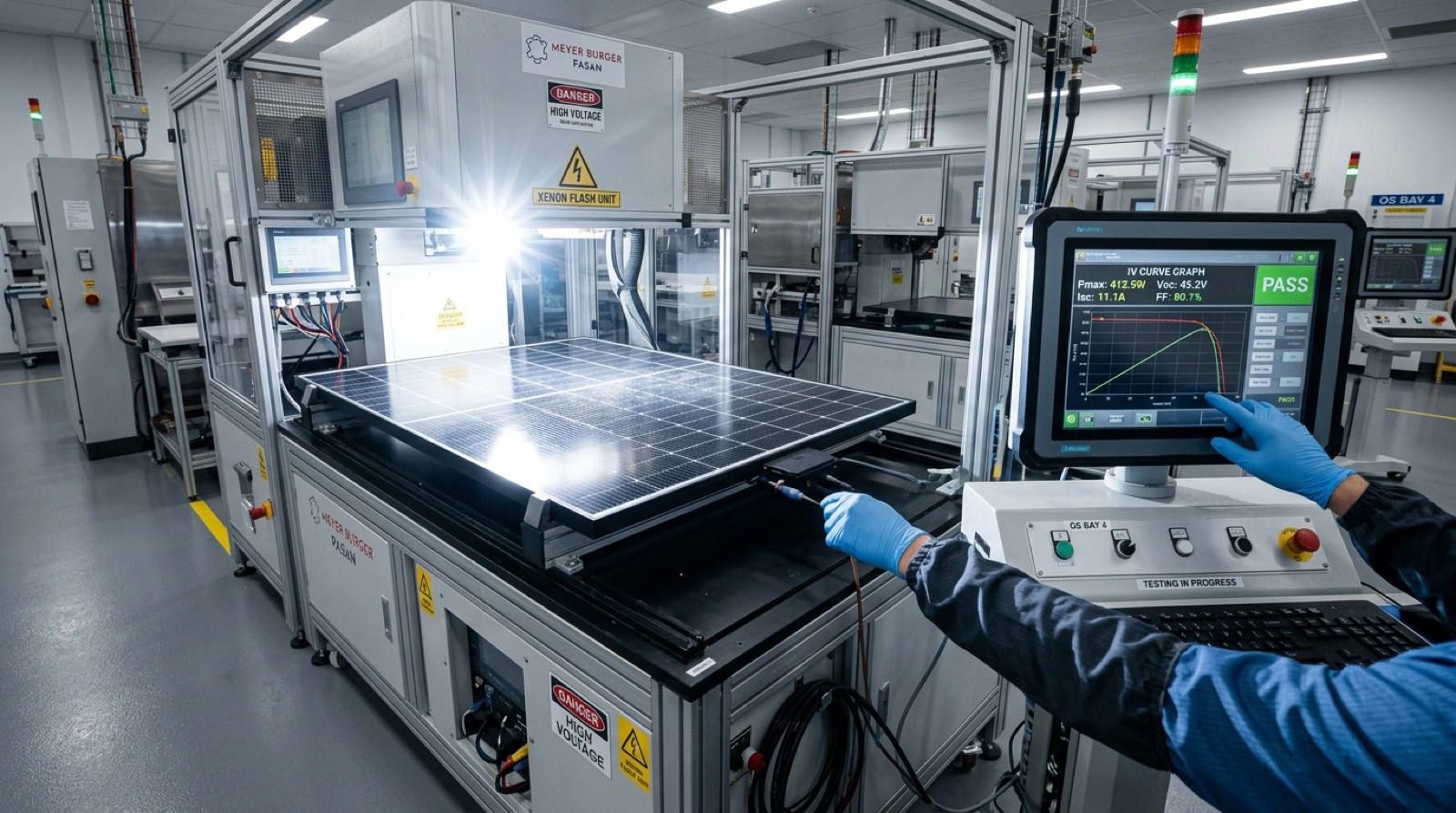
Indicative imagery from the TPC delivery library. Site-specific photography is held under the engagement NDA and shared with qualified counterparties on request.
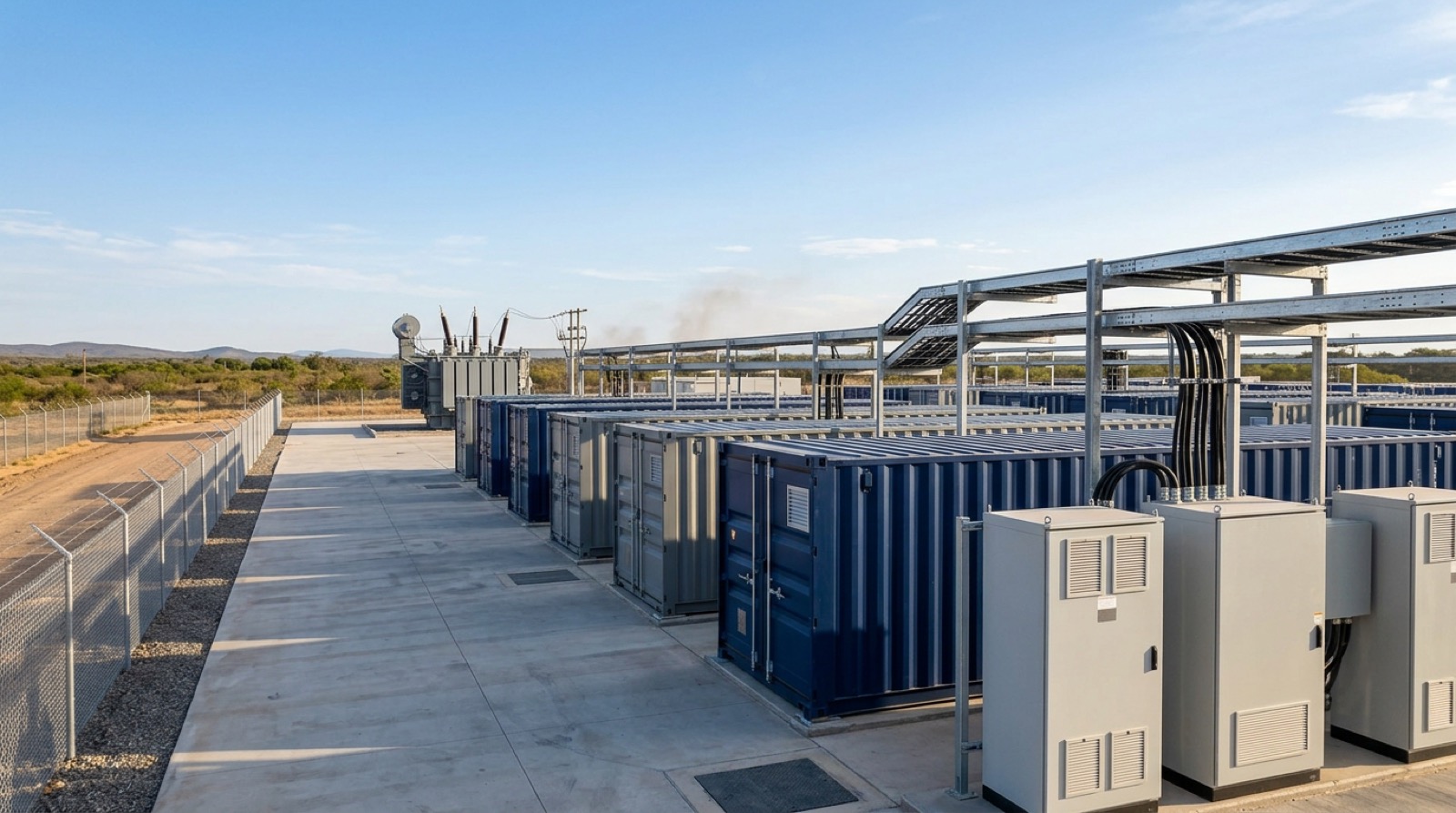
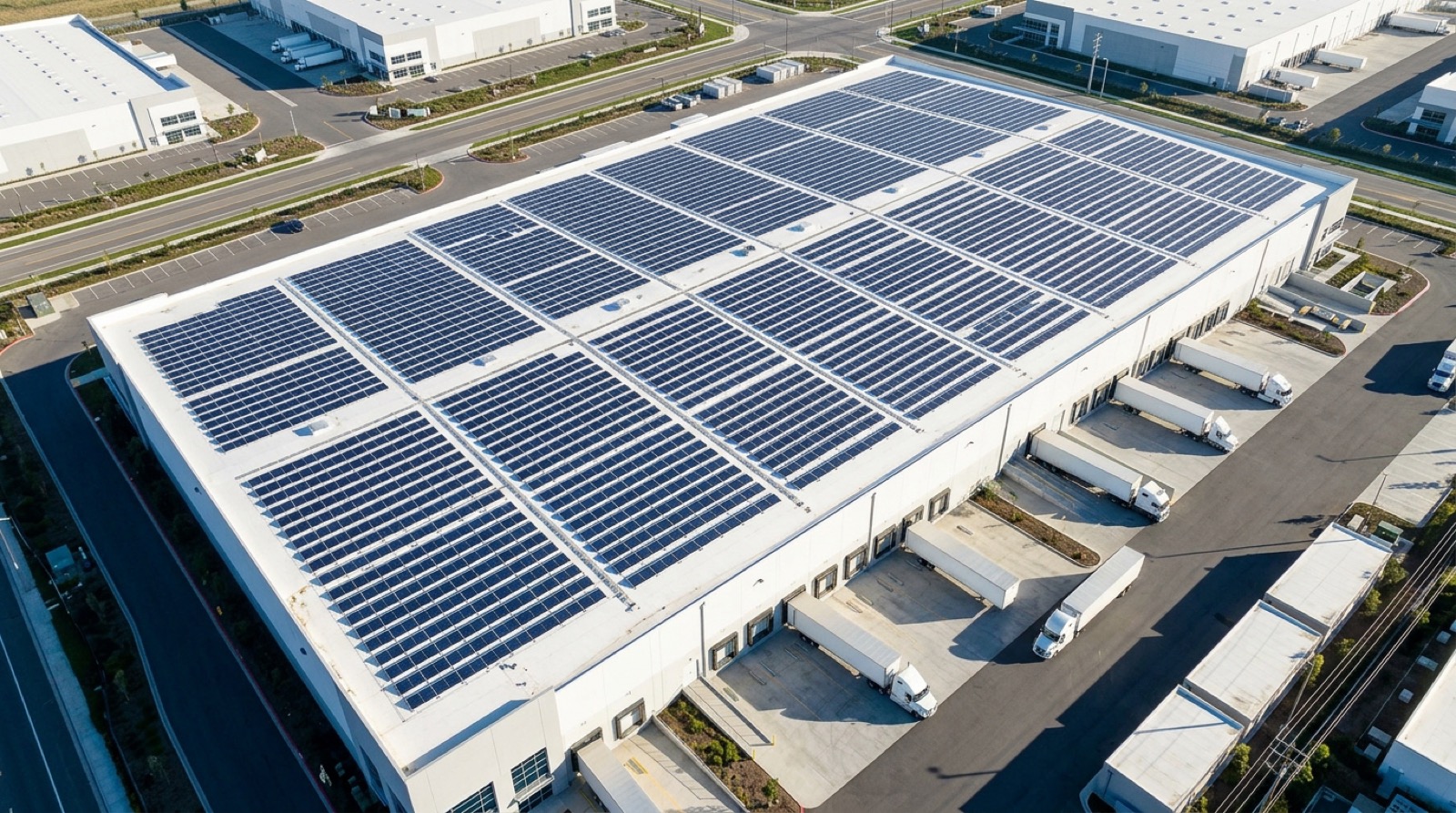
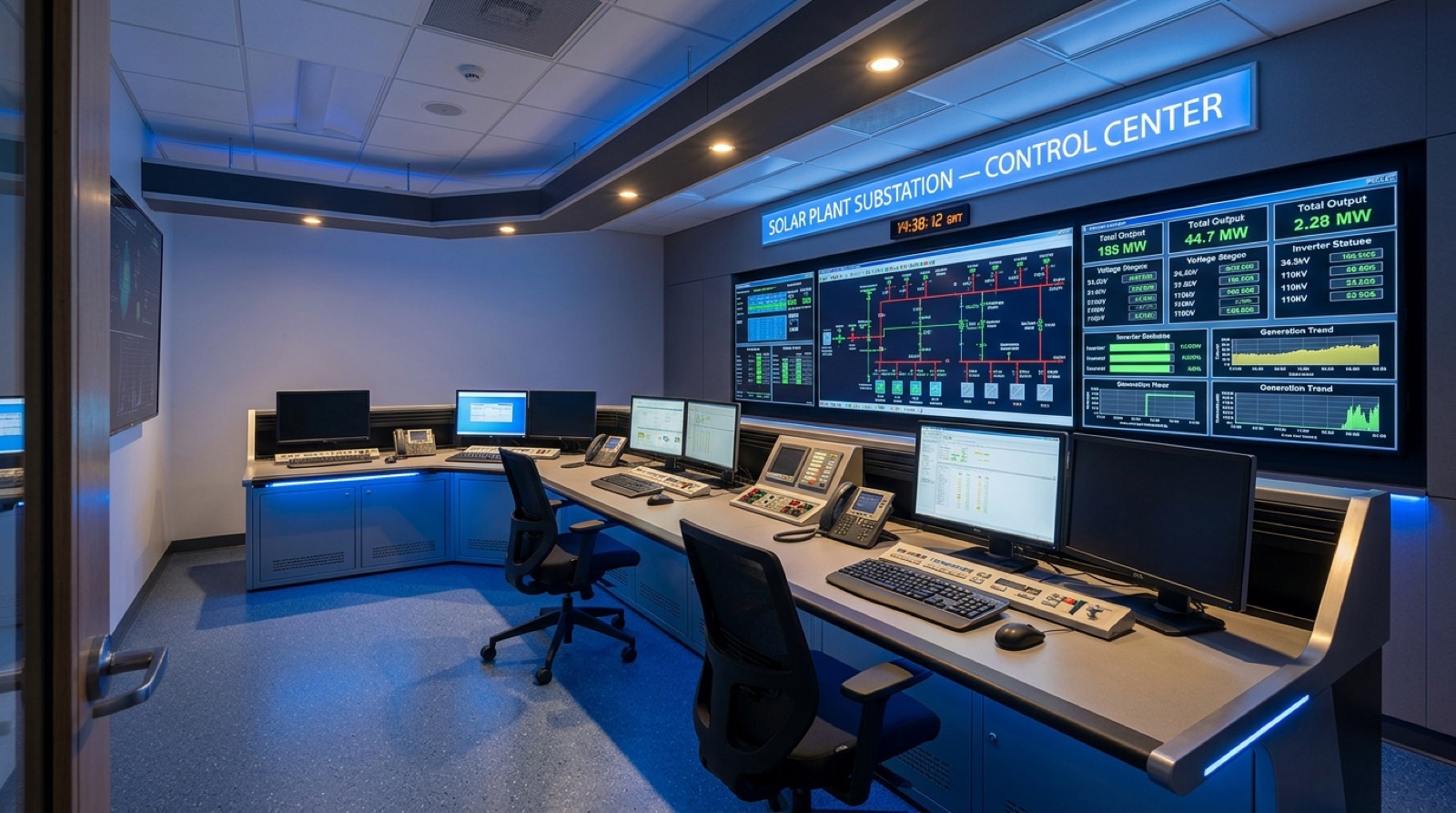
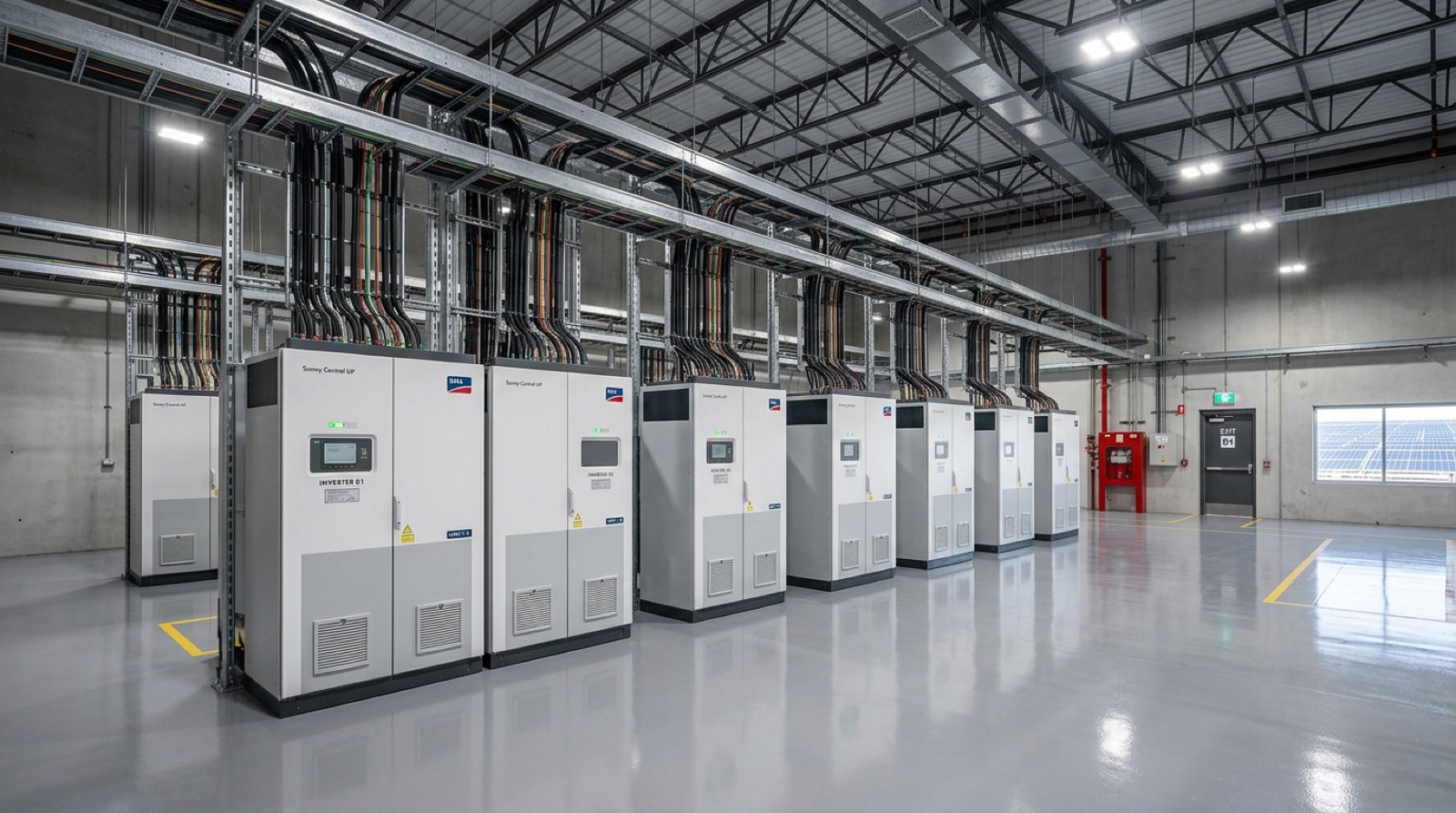
A 5 MWp solar array paired with 8 MWh of LFP storage shaves grid kWh from a Tier III+ Cairo data centre by day — and bridges any utility disturbance to the diesel ride-through envelope inside the IT load's 50 ms tolerance window. Tested on a live commercial run, every utility outage of the trial year.
The colocation operator runs a Tier III+ facility with a contracted 6.5 MW IT load and SLA-backed 99.982% availability — every minute of unplanned downtime carries a contractual penalty plus a brand-trust cost that doesn't appear on a P&L. The Egyptian grid in this corridor of Cairo is reliable on most days; the days it isn't, it isn't for between 4 and 90 seconds.
That window is the problem. The site's existing N+1 diesel set takes 2.0–2.4 seconds to start, sync, and pick up load. Servers tolerate ~50 ms. Static UPS modules carried the gap historically — at a ~7% energy overhead on continuous double-conversion through normal grid operation, every hour of every day, 365 days a year.
The brief: shave the static UPS energy overhead, hold the IT-load tolerance window through every utility event, deliver renewable energy attribution for the operator's Scope 2 reporting — and integrate without a single seconds-long outage during commissioning.
Most solar+storage data-centre retrofits keep the static UPS in the loop and treat the BESS as auxiliary. The Cairo brief inverted that: specify the BESS at UPS-grade transfer speed and let it carry the ITIC tolerance window, then use the static UPS as a fallback. The PV array becomes a fuel source for the BESS by day, displacing grid kWh; the grid charges the BESS at off-peak when the PV cannot.
Three engineering decisions diverge from a typical 5 MWp commercial PV-plus-storage retrofit:
A four-source architecture: utility grid, PV array, LFP BESS, and N+1 diesel — all coupled via the building's MV switchboard, with the BESS grid-forming PCS as the master frequency reference during any loss of utility. Static UPS retained as armed fallback through the validation year.
Component selection is illustrative — final BoM in any binding TPC delivery is calibrated to data-centre operator's reliability standards, structural rooftop survey, and grid-code compliance current at quote time. PV equipment, BESS and PCS ship factory-direct; HV/LV scope and structural mounting are procured locally under TPC engineering supervision.
| Component | Specification | Qty | Source |
|---|---|---|---|
| PV module | N-Type TOPCon mono-facial · 565 W · 144-cell · IEC 61215 / 61730 · low-degradation warranty | 8,850 | Factory-direct |
| Rooftop ballasted mounting | Aluminium 6005-T5, 10° tilt, ballast-engineered to building structural survey, EN 1991 wind load | ~3.2 MWp roof | Site-procured |
| Carpark canopy structure | Hot-dip galvanised steel canopy, 20° tilt, 2-bay cantilever, 1,800 mm headroom | ~1.8 MWp canopy | Site-procured |
| String inverter | 1500 V DC · 250 kW commercial · IEC 62109 · IEC 61727 · IP66 · grid-code Q at night | 22 | Factory-direct |
| LFP battery containers | 20-ft outdoor LFP container · 2 MWh per container · liquid-cooled · UL 9540A tested · IEC 62619 | 4 | Factory-direct |
| Power conversion system (PCS) | Grid-forming · 4 MW total · IEEE 2800 · sub-50 ms anti-islanding-to-grid-forming transition | 2 | Factory-direct |
| 11 kV pad-mount transformer | Dry-type cast resin · 5 MVA · IEC 60076 · IK10 enclosure · low loss | 1 | Factory-direct |
| Hybrid plant controller | IEC 61850 + Modbus to facility DCIM · grid-forming master · solar self-consumption logic · OCPP for future EV | 1 | Factory-direct |
| MV switchboard | 11 kV vacuum-break, IEC 62271, with PV / BESS / utility / genset feeders + IT bus tie | 1 | Site-procured |
| DC combiner / SPDs | 1500 V Type II surge arresters, fused string combiners, arc-fault detection | 110 | Factory-direct |
| Cabling & earthing | 1500 V DC PV cable, MV armoured to IEC 60502, IT bus-tie cabling, IEC 62305 lightning protection | ~6.4 km | Site-procured |
| Fire detection & suppression | Aspirating smoke detection in BESS containers · NFPA 855 setback · clean-agent suppression | 1 lot | Site-procured |
| Hot-cutover commissioning | Digital-twin staged rehearsal, 17-step switching plan, 10-minute change windows, witness sign-off | 1 package | TPC engineering |
| Performance test & SLA | BESS transfer-time witness test, 14-day capacity test, 12-month uptime monitoring, lender-grade reporting | 1 package | TPC engineering |
Monthly generation is computed from public NASA POWER irradiance for 30°N Greater Cairo, applied to the as-designed array spec at PR 0.78 — typical for low-tilt rooftop and 20° canopy installs in a hot, mildly soiled urban environment. Hover any bar for the underlying figure.
Generation profile is dominated by a flat May–August plateau (~900–950 MWh/month). PV self-consumption against the 4.8 MW running IT load is >95% on a continuous basis — every PV kWh displaces a grid kWh; the BESS shifts the residual into evening peak-tariff hours. The static UPS energy overhead saved is the larger of the two operational wins (>3.0 GWh/yr); the PV yield (~9.6 GWh/yr) is the second.
Grid-following PCS quotes were 22% lower at the BoM line. They were also 180–250 ms slower on transfer, putting the IT load on the wrong side of the ITIC tolerance curve at any voltage sag deeper than 70%. The grid-forming premium is an insurance policy paid in capex once; the alternative is paid in IT-load tickets every utility brown-out for the asset's life.
Hot commissioning of a Tier III+ facility is not a paper-FAT exercise. The 17-step switching plan was rehearsed against a digital-twin model of the existing UPS topology with all four credible failure modes injected — and the rehearsal caught a synchronisation race-condition between the BESS PCS and one static UPS module that would have tripped the IT bus on the live cutover.
The static UPS double-conversion overhead at this site was running ~3.2 GWh/yr of pure grid energy lost to conversion heat. Replacing it with a grid-forming BESS in the loop saved more annual energy than the entire PV array generated. The headline number is the PV yield; the larger commercial number is the conversion-loss avoided.
Indicative imagery from the TPC delivery library. Site-specific photography is held under the engagement NDA and shared with qualified counterparties on request.
The brief was four nines, not solar. The solar was the way we paid for the four nines. If a sub-50-millisecond transfer is the only thing the IT load notices on a brown-out, the BESS has done its job — and any kWh of PV that lands on top of that is energy revenue and Scope-2 attribution at the same time. We commissioned hot. The DCIM dashboard didn't blink.Hybrid plant controls lead · data-centre delivery · TPC engineering
Quote is illustrative of the engineering posture TPC brings to mission-critical hybrid retrofits. This reference profile is not tied to a named or contracted client; site-specific testimonials are released only with the operator's signed consent under the engagement NDA.
Mission-critical PV-plus-storage hybrid, data-centre retrofit, or grid-forming BESS for an SLA-backed load — TPC's engineering team will scope the same equipment envelope for your project under a one-business-day SLA.